


Want your flowers to last longer while reducing waste? Most bouquets wilt in just 3–5 days due to common mistakes like bacteria buildup, dehydration, and poor care. By making small changes, you can extend their life to 10–14 days without harming the planet. Here's how:
- Choose local, seasonal flowers to avoid high carbon emissions from imported blooms.
- Use natural preservatives like sugar, lemon juice, and bleach to keep flowers vibrant.
- Change water every 2 days and clean vases to prevent bacteria.
- Trim stems at an angle for better water absorption.
- Compost withered flowers and reuse vase water responsibly.
These simple steps keep your flowers fresh longer and reduce your footprint. Ready to care for your blooms the right way? Keep reading for the full guide.
Home Flower Care Tips That ACTUALLY WORK
If you're looking for fresh blooms to practice these tips, our florist in Marietta, GA offers a wide selection of seasonal arrangements.
sbb-itb-2be19a4
Choosing Local and Seasonal Flowers
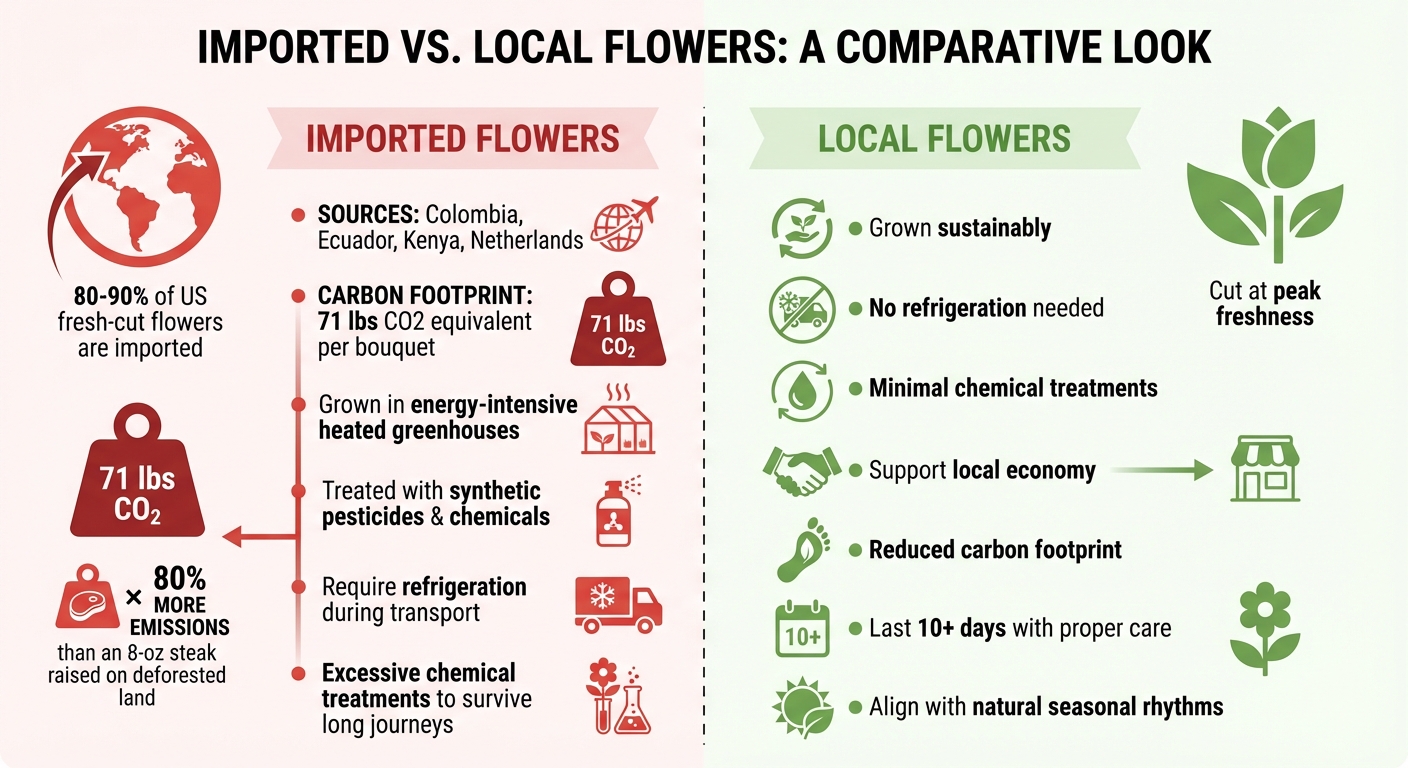
Environmental Impact of Imported vs Local Flowers Comparison
Why Local Flowers Matter for the Environment
Did you know that between 80% and 90% of fresh-cut flowers sold in the United States are imported? These blooms often come from countries like Colombia, Ecuador, Kenya, and the Netherlands. The environmental cost? A single imported bouquet generates about 71 pounds of carbon dioxide equivalent - around 80% more than an eight-ounce steak raised on deforested land.
The journey of imported flowers isn’t just about carbon emissions. They’re often grown in energy-intensive heated greenhouses and treated with synthetic pesticides and chemicals to survive long transport. These practices can harm ecosystems and increase the environmental toll. On the other hand, local flowers are cut at their freshest, grown sustainably, and don’t require refrigeration or excessive chemical treatments.
"By supporting local flower growers, you not only lower the environmental impact but also contribute to the local economy."
– Meghan Campbell, Owner and Writer, Twisted Bramble
Choosing local blooms not only helps the planet but also ensures fresher, longer-lasting arrangements. Marietta Floral Design sources flowers from nearby growers, offering arrangements that support regional farms while reducing your carbon footprint.
Seasonal Arrangement Options
Local and seasonal flowers go hand in hand, offering a sustainable way to enjoy vibrant, fragrant, and long-lasting blooms. Flowers that thrive in their natural season are generally more resilient and fresher than those grown in artificial conditions. Harvested just before sale, seasonal flowers can last 10 days or more with proper care. By choosing what's in season, you're aligning with nature's rhythm and reducing the need for environmentally taxing practices.
Marietta Floral Design celebrates seasonal beauty with three collections: the Bright Arrangement, Neutral Bouquet, and Pastel Bouquet, all starting at $55.00. Each arrangement is handcrafted and customizable, giving you stunning blooms that are as kind to the environment as they are to your home.
Using Natural Preservatives to Keep Flowers Fresh
Once you've picked out fresh, local blooms, the next step is keeping them vibrant for as long as possible. Using natural preservatives is a simple and eco-friendly way to maintain their freshness. These homemade flower foods use basic household ingredients - like a carbohydrate for energy, an acidifier to improve water absorption, and a biocide to fight bacteria. They’re just as effective as store-bought options and much kinder to the planet .
DIY Flower Food Recipes
Before you start, make sure your vase is squeaky clean. Use a solution of 1 part bleach to 10 parts water to eliminate bacteria that could harm your flowers. Once that’s done, try one of these easy recipes:
- Classic Recipe: Combine 1 quart of water with 1 tablespoon of sugar, 2 tablespoons of lemon or lime juice, and 1/2 teaspoon of household bleach. The sugar gives flowers the energy they need to stay healthy and bloom, while the citrus juice lowers the water's pH, helping it move more easily through the stems. The bleach keeps bacteria and fungi at bay .
- Vinegar Alternative: Mix 1 quart of water with 1 tablespoon of sugar, 1 tablespoon of white vinegar, and 1 teaspoon of bleach. This is a great option if you don’t have lemons or limes on hand.
- Soda Recipe: Blend 1 part clear, non-diet citrus soda (like Sprite or 7-Up) with 3 parts water, then add a few drops of bleach. The soda simplifies things by providing both sugar and acid in one step .
For best results, use lukewarm water (around 100–110°F or 37–43°C) when preparing your flower food. This helps the flowers absorb water more quickly. Be sure to change the water and refresh the flower food every 2–3 days to keep bacteria from building up .
Important Tip: Never mix bleach with vinegar - this produces toxic chlorine gas, which is highly dangerous.
Why Natural Preservatives Work Better
The secret to these DIY solutions lies in their simplicity and sustainability. Unlike commercial flower food packets, which often contain industrial chemicals, natural alternatives rely on biodegradable, food-grade ingredients you likely already have in your kitchen. Staples like sugar, lemon juice, and vinegar are not only safer to use at home but also gentler on the environment. And they still provide everything your flowers need to stay hydrated and vibrant.
"Flower food will help increase water uptake due to the sugars that provide energy - this encourages them to drink more."
– Paris Lalicata, Plant Expert, The Sill
Daily Care and Maintenance
Taking just a few minutes each day to care for your flowers can make all the difference in keeping them vibrant longer. By pairing your homemade flower food with consistent daily upkeep, you’ll give your blooms the best chance to thrive.
Water and Vase Care
Change the water completely every 48 hours to promote healthier flowers. Simply topping off the vase won’t cut it - leftover bacteria, slime, and toxins cling to the vase walls and stems, contaminating fresh water. At room temperature (72°F), bacteria double every 20 minutes, and even a single submerged leaf can introduce 100 bacteria cells that multiply into 167 million within 12 hours.
"Water change frequency is the single most critical factor in vase life, yet it's the most misunderstood."
– Reema Flower Shop
When refreshing your arrangement, start by emptying the vase completely. Scrub it thoroughly with hot, soapy water or a bleach solution (1 part bleach to 10 parts water) to eliminate hidden biofilm. Rinse the vase well, re-cut the stems, and refill with clean water and flower food. Be vigilant - change the water every 48 hours or sooner if it turns cloudy or smells sour. Some flowers, like sunflowers and dahlias, shed more sugars and need daily water changes, while orchids can go up to 72 hours.
Once the water is fresh, turn your attention to the stems for better hydration.
How to Trim Stems Correctly
Re-cut flower stems by ½ to 1 inch every time you change the water, ideally every 2 to 3 days. Use sharp bypass pruners or floral shears for a clean, angled cut - avoid kitchen scissors, which can crush the stem and block water flow. A 45-degree angle increases the surface area for water absorption and prevents the stem from sitting flat against the vase bottom, which could restrict water uptake.
For best results, trim stems underwater - either in a bowl of water or under running water - to prevent air bubbles from forming in the stem. Bacteria can clog the stem base within 48 hours, reducing water absorption by up to 80%, so trimming regularly ensures fresh, open pathways for hydration. Additionally, remove any leaves that would sit below the waterline to minimize bacterial growth.
"I view caring for flowers like caring for yourself. They need water and food just like you. They like showers just like you. They need haircuts just like you."
– Arissa DeFrancesca, Professional Florist, Bank of Flowers
Where to Place Your Flowers
Location matters when it comes to keeping flowers fresh. Place your arrangement in a cool, shaded area, away from heat sources and ripening fruit. Heat from radiators, vents, or kitchen appliances can speed up dehydration and cause colors to fade. If possible, move your flowers to a cooler spot overnight to help them recover.
Ripening fruit releases ethylene gas, which accelerates wilting, so keep your bouquet far from the fruit bowl or aging blooms. Also, avoid drafty areas, which can destabilize the environment for delicate petals. Pay attention to how sunlight moves through your space - what’s shaded in the morning might be in direct sunlight by the afternoon.
"Warm rooms increase respiration rates and shorten vase life, while cooler spaces slow metabolic demand and reduce wilting."
– Robin, Grow & Bloom Co.
Disposing of Flowers Responsibly
Wrapping up your eco-friendly floral routine includes disposing of flowers in ways that benefit both your garden and the planet. Caring for flowers sustainably means thinking about their entire lifecycle. By composting, you can divert 8–10 pounds of organic waste from landfills each month, reduce your carbon footprint by 4–6%, and return essential nutrients to the soil. After all the care you've given your flowers, these disposal practices ensure your efforts come full circle.
Composting Flowers and Foliage
Start by removing anything that doesn’t belong in a compost pile, like floral foam, plastic wraps, ribbons, and green floral wire. Give the flowers a quick rinse before composting. To speed things up, cut stems into 3–4-inch sections, which can reduce decomposition time by as much as 50%. For tougher, woody stems or those with thorns, use a hammer to break them open and expose the inner fibers.
Fresh blooms and leaves are nitrogen-rich “greens,” while dried materials are carbon-rich “browns”. Try the "lasagna method" for composting: lay down twigs for drainage, then alternate layers of flower waste with soil or finished compost to introduce helpful microorganisms. Turn the pile weekly to aerate it, and maintain moisture at the level of a wrung-out sponge. Composting works best at temperatures between 110°F and 160°F (43°C to 71°C), and with the right conditions, flower materials can break down in 4 to 8 weeks during warm weather.
"Anything with a softer stem can and should be composted."
– Justin Lievano, Floral Design Manager, UrbanStems
Be cautious with flowers showing signs of powdery mildew or black spot - compost these only if you're using a hot composting method that reaches temperatures above 140°F. If you’re using a vermicompost setup, skip toxic flowers like azaleas, rhododendrons, or foxglove, as they can harm the worms. Spring bulbs like tulips or hyacinths should be shredded before composting to prevent them from sprouting in the pile.
Reusing Vase Water
Another way to stay eco-friendly is by reusing vase water. Change the water every 24 to 48 hours and use it to water established outdoor plants or hardy shrubs, as these plants are better equipped to handle organic matter and bacteria. If the water contains bleach-based flower food, dilute it before using it on sensitive houseplants.
Only reuse water that’s still relatively clear. Once it turns cloudy, yellow, or starts to smell sour, it’s filled with anaerobic bacteria and toxins. At that point, add it to your compost pile or pour it into outdoor soil instead of using it on indoor plants. Flowers like sunflowers and dahlias, which release a lot of sugars, can make vase water unusable within 24 hours - reuse or dispose of their water quickly.
"I always say keep the water fresh enough that you would want to drink it yourself."
– Robin Hilleary, Founder, Fleurotica
Cleaning Up with Biodegradable Materials
To make disposal easier, opt for foam-free floral design alternatives. Use natural twine, organic ribbons, or wooden picks without wire - these can go straight into the compost, unlike green floral wire or plastic picks, which need to be removed manually. Always check arrangements for hidden non-compostable items before composting.
For packaging, choose items labeled "Home Compostable" rather than just "biodegradable", as many biodegradable plastics don’t break down in backyard compost bins. Materials like Polylactic Acid (PLA) bioplastics or wraps made from corn, sugarcane, or potato peelings are good options. If you’re pressing or drying flowers to reuse, try biodegradable materials like printer paper, facial tissue, wax paper, or parchment paper.
"Air drying is the easiest, most economical, and environmentally friendly method. It is also free from chemicals, so when the flowers are no longer usable, they can be put into the compost."
– Jim Sutton, Associate Director of Display Design, Longwood Gardens
Conclusion
Sustainable floral care boils down to making thoughtful choices: opting for local flowers and adopting eco-friendly practices can significantly reduce waste and carbon emissions. By sourcing blooms from local businesses like Marietta Floral Design, you help cut down the environmental impact tied to importing flowers. Since most flowers in the U.S. are imported, they come with a hefty carbon footprint. Local flowers, on the other hand, are fresher, last longer, and support your community.
Incorporating natural preservatives, using fresh water, trimming stems properly, and composting are simple ways to avoid harmful chemicals and reduce microplastics. Traditional floral foam, made with toxic substances like phenol and formaldehyde, breaks down into microplastics that can pollute water sources. By skipping foam and composting floral waste, you transform it into nutrient-rich soil instead of adding to landfills.
These small but impactful changes not only benefit the environment but also enhance floral design. As Marta Sandri, Floral and Botanical Stylist, puts it:
"Sustainability in wedding florals isn't about claiming to be 'green' - it's about reducing scale and waste through intentional design. Fewer elements, more impact."
– Marta Sandri
Beyond environmental benefits, these choices make your arrangements safer and healthier for your home. Locally grown, organic flowers reduce exposure to pesticides, and seasonal blooms require less energy-intensive greenhouse cultivation. This way, your home thrives in harmony with nature’s rhythms.
FAQs
How can I tell if flowers are truly local and seasonal?
When selecting flowers, a simple question to your florist can make a big difference: Are these blooms sourced from nearby farms and naturally in season? Local, seasonal flowers are not only fresher but also require fewer resources to grow, making them a more eco-conscious choice.
To ensure you're making an environmentally friendly decision, check for certifications or labels that confirm sustainable growing practices. By choosing flowers that are both local and in season, you're supporting nearby farmers and creating arrangements with a smaller ecological footprint.
What’s the safest bleach amount for DIY flower food?
The safest amount of bleach to use in DIY flower food is around 1 teaspoon for every quart of water. This small amount helps eliminate bacteria and fungi while keeping your flowers unharmed. If you're using metric measurements, go with 1/4 teaspoon per liter of water, which is roughly the same. Be careful not to overdo it - too much bleach can harm the flowers.
Can I compost flowers sprayed with pesticides?
It's best to steer clear of composting flowers that have been treated with pesticides. These chemicals can seep into your compost, potentially affecting the quality of your garden soil. To keep your compost eco-friendly, avoid tossing in flowers that have been exposed to pesticides, herbicides, or chemical preservatives.