


Keeping cut flowers alive longer is easier than you think. The key lies in three simple steps: prevent bacteria growth, provide proper nutrients, and control the environment. Here’s a quick summary of what you need to do:
- Start with a clean vase: Wash it with hot, soapy water and disinfect with diluted bleach.
- Trim stems properly: Cut at a 45-degree angle and remove leaves below the waterline.
- Use flower food or DIY preservative: Add sugar, an acid (like lemon juice), and a small amount of bleach to the water.
- Change water every 2-3 days: Keep it clean and re-trim stems regularly.
- Pick the right spot: Avoid direct sunlight, heat, drafts, and ripening fruits.
- Refrigerate overnight: For most flowers, this can extend their life by days.
With these steps, your flowers can last up to 10-14 days, nearly doubling their usual lifespan. Keep reading for more tips on daily care and placement to maintain vibrant blooms.
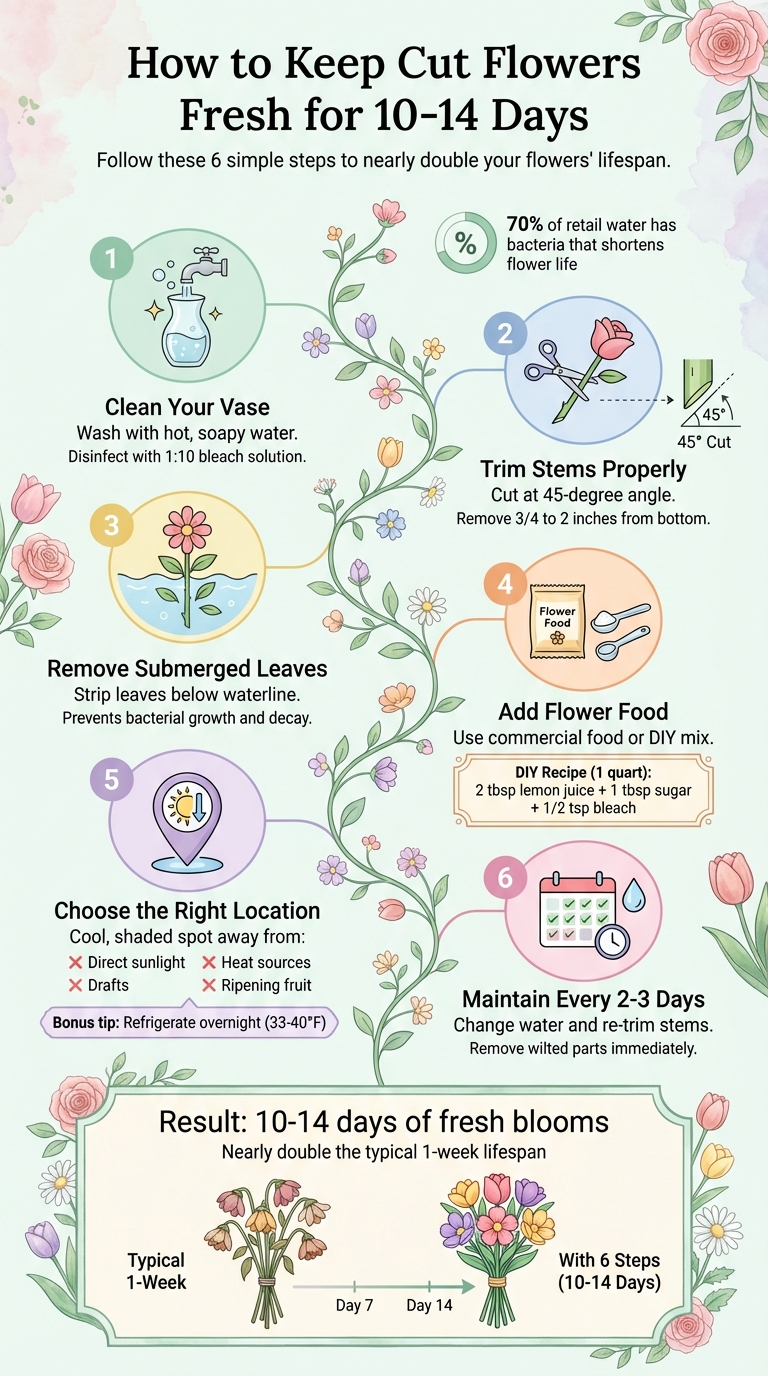
6 Steps to Keep Cut Flowers Fresh for 10-14 Days
How to Make Cut Flowers Last Longer in a Vase: Our 5 Step Method
Preparing Your Vase and Stems
Getting your vase and stems ready is the first step to keeping your flowers fresh and vibrant. A clean vase and properly trimmed stems are essential to prevent bacteria buildup and wilting.
Clean the Vase
Starting with a spotless vase is non-negotiable. A 1995 Dutch study found that nearly 70% of retail florists and supermarkets in Europe and the U.S. used water with bacteria levels high enough to shorten the life of flowers - or even kill them. Rachel Bridgwood, Co-owner of Sweet Root Village, puts it plainly:
"Everything you do to extend the life of your blooms is to avoid bacteria growth. Starting with a dirty vessel would immediately set you back, so working with a clean vase will be the best way to start."
To clean your vase, wash it thoroughly with hot, soapy water, then disinfect it using a solution of one part bleach to ten parts water. Make sure to rinse it well to remove any bleach residue. This process eliminates bacteria that could clog stems and block water absorption.
Once your vase is clean and ready, it’s time to prepare the stems for maximum water uptake.
Trim Stems at an Angle
With your vase prepped, grab a pair of sharp garden shears or kitchen scissors to trim your flower stems. Avoid using dull tools - they can crush the stems and restrict water flow. Cut about 3/4 to 2 inches off the bottom of each stem at a 45-degree angle. This angled cut increases the surface area, allowing the stems to absorb water more effectively. To avoid air bubbles, trim the stems under running water or submerge them in water immediately after cutting. For woody stems, like roses, make an additional 2-inch vertical cut at the base to improve water intake.
Remove Leaves Below the Waterline
Finally, check for any leaves that would sit below the waterline. Remove these leaves to stop them from decaying and promoting bacterial growth. Jennifer Petritz, Horticulturist and President of the American Hydrangea Society, underscores this point:
"Your blooms may suffer if you leave the foliage intact."
Using sharp scissors, snip off the submerged leaves. This not only prevents unpleasant odors and decay but also ensures that water flows directly to the stems and flowers. By doing this, you’ll help your blooms stay fresh and lively for a longer time.
Using Flower Food or Homemade Preservatives
Once your vase is clean and your stems are trimmed, the next step is giving your flowers the nutrients they need to thrive. Adding the right ingredients to your water can make all the difference in extending the life of your blooms. Whether you use commercial flower food or a homemade alternative, this step is key to keeping your flowers fresh and vibrant.
What Flower Food Contains and How It Works
Commercial flower food is designed to give your flowers the essentials they need to stay healthy. It usually includes three main components:
- Sugar: Provides energy to keep blooms looking lively.
- An acidifier (like citric acid): Lowers the water's pH, making it easier for stems to absorb water.
- A biocide or antibacterial agent: Prevents bacteria from building up and blocking the stems.
To use, simply dissolve one packet of flower food in lukewarm water. Refresh the solution every two to three days to keep it effective.
DIY Flower Preservative Recipe
If you don’t have commercial flower food on hand, you can whip up a simple DIY alternative. For one quart of water, mix:
- 2 tablespoons of lemon juice (or vinegar)
- 1 tablespoon of sugar
- ½ teaspoon of bleach
The lemon juice or vinegar helps lower the pH, sugar provides nourishment, and the bleach keeps bacteria at bay. While this homemade mix may not match the effectiveness of commercial flower food, it’s a quick and budget-friendly way to keep most cut flowers looking fresh.
Marietta Floral Design's Flower Food Sachets

If you order arrangements like the Bright Arrangement or Pastel Bouquet from Marietta Floral Design, you’ll receive pre-measured flower food sachets with your delivery. These sachets are specially formulated to give your blooms the perfect balance of nutrients. Just dissolve one in your vase water, and your flowers will stay vibrant and healthy from the moment they arrive.
sbb-itb-2be19a4
Where to Place Flowers and Temperature Control
After nourishing your flowers, where you place them plays a big role in keeping them fresh longer. A little thought about location can go a long way in extending their beauty.
Choose a Cool, Shaded Location
Keep your flowers away from direct sunlight, heat sources, and drafts. Warm temperatures speed up their aging process, cutting down the time they remain vibrant in a vase. This means avoiding areas near radiators, heating vents, or kitchen appliances that emit heat.
"Keep your flowers in a cool, dark place, away from direct sunlight, heat, and drafts." - Flower Moxie
A cool, shaded spot in your home is ideal. Think of places like a dining room table that's not near windows or a hallway console table. The cooler the room, the slower your flowers will age and wilt.
Keep Flowers Away from Fruit
Flowers and fruit don’t mix well. Ripening fruits - like bananas, apples, avocados, tomatoes, peaches, and pears - release ethylene gas, an invisible and odorless hormone that speeds up flower aging. Even tiny amounts of ethylene, as low as 0.1 parts per million, can harm your flowers.
"Ripening fruit, like bananas, apples, avocados, peaches, and pears, produce ethylene gas, which causes flowers to expire and wilt prematurely." - Lori Hernandez, Three Acre Farm
Some flowers are especially sensitive to ethylene. For example, carnations exposed to it may see their vase life drop from 3-4 weeks to just one week. Roses, lilies, snapdragons, and orchids are also highly vulnerable. To avoid this, keep your arrangements far away from fruit bowls or any ripening produce.
Refrigerate Overnight for Longer Life
Refrigerating your flowers overnight can make a noticeable difference in how long they last. Florists typically store flowers in coolers set between 33°F and 40°F to maintain their freshness, and your home refrigerator can work just as well.
"Refrigerate them overnight, every night before you go to bed, and take them out in the mornings. That's how florists keep them fresh and vibrant for long." - BlackTulipFlowers.com
Before placing flowers in the fridge, remove any fruits and vegetables to prevent ethylene exposure. Also, ensure the fridge is clean and free from strong odors that might affect the flowers. Important: Avoid refrigerating tropical flowers, as they are sensitive to cold temperatures. For most other flowers, this simple overnight step can add several extra days to their lifespan.
Daily and Weekly Care Routine
Once your flowers are set up and properly nourished, maintaining their vibrancy requires regular attention. Keeping blooms fresh isn’t a one-and-done deal - it’s an ongoing process. A simple care routine can extend the life of your arrangement by several days, or even weeks.
Change Water Every 2-3 Days
Fresh water is crucial for keeping bacteria at bay and ensuring flowers stay hydrated. Replace the water in your vase every 2-3 days to maintain its cleanliness and nutrient levels. Victoria Ahn, florist and owner of Designs by Ahn, emphasizes:
"It's recommended to replace the water in the vase daily, as the cleaner the water the longer the lifespan of the arrangement and flowers."
When refreshing the water, take a moment to re-trim the stems as well. If you notice the water becoming cloudy, don’t wait - change it immediately. Afterward, inspect your arrangement and remove any wilted or aged parts to keep everything looking fresh.
Re-Trim Stems and Remove Wilted Parts
Every 2-4 days, re-trim the stems at a 45° angle using sharp scissors or a knife. This angled cut helps prevent bacterial buildup and improves water absorption. Be sure to cut past any brown or discolored sections. At the same time, check for any drooping or decaying flowers and leaves. Remove these entirely - don’t just pluck off the wilted petals. Robin Hilleary, founder of Fleurotica, advises:
"If you pull the dead stem, it's not allowed to pass bacteria onto other stems. This way, you can keep the whole thing rolling for a few weeks. If you take out things as they go, you'll be left with a few beautiful stems."
Conclusion
Keeping your blooms fresh and vibrant for longer comes down to three key practices: using a clean vase, providing proper nutrients, and staying consistent with care. These simple steps create the perfect environment for your flowers to thrive.
Start by thoroughly cleaning your vase to eliminate any bacteria that could harm your flowers. Add flower food or a preservative to give them the nutrients they need. Then, make regular maintenance part of your routine - change the water every 2-3 days, trim the stems at a 45-degree angle, and remove any wilting petals or leaves before they affect the entire arrangement. These small efforts go a long way in keeping your flowers looking their best.
Where you place your flowers and the surrounding temperature are just as important. Keep them in a cool, shaded spot, away from direct heat or fruits that release ethylene gas. For an extra boost, refrigerate your bouquet overnight (about 8 hours), which can help extend its freshness for up to 10 days.
With the right care, many cut flowers can last 10-14 days, nearly doubling their typical lifespan of one week. A little effort truly pays off, allowing you to enjoy your arrangements' beauty and charm for much longer. These simple habits ensure your flowers stay lively and stunning throughout their extended life.
FAQs
How often should I change the water to keep cut flowers fresh?
To ensure your cut flowers stay fresh and lively, make it a habit to change the water every 2 to 3 days. This simple step helps reduce bacteria growth, which can otherwise shorten the life of your blooms.
When refreshing the water, take a moment to rinse the vase thoroughly and trim the stems at an angle. Cutting the stems this way allows them to absorb water more effectively. You can also add fresh flower food to the water - this provides extra nutrients to keep your flowers looking beautiful for longer.
Can I use items from home to help my flowers last longer?
To keep your fresh-cut flowers looking lively for longer, you can whip up a simple preservative with items you likely already have at home. Mix together sugar, white vinegar or lemon juice, and a small amount of bleach. The sugar feeds the flowers, the vinegar or lemon juice helps balance the water's pH, and the bleach fights off bacteria. This quick and easy solution can make a big difference in extending the life of your blooms.
Why is it important to keep flowers away from ripening fruits?
Fresh fruits, especially those that are ripening, give off ethylene gas - a natural compound that accelerates the aging and wilting of fresh flowers. If you want your floral arrangements to stay lively and fresh for a longer time, keep them away from fruit bowls or any ripening produce. This simple shift can help maintain their charm and extend their lifespan.