


Hydrating cut flowers properly is the key to stunning event arrangements that last. Without proper care, flowers can wilt quickly, lose their color, or droop during your event. Here's a quick breakdown of what you need to know:
- Clean tools and containers: Dirty tools can introduce bacteria that block water absorption. Sanitize everything with bleach and water before starting.
- Prepare stems: Remove leaves below the waterline, cut stems at a 45° angle, and use specific techniques for different flower types (e.g., woody, hollow, or sap-producing stems).
- Use hydration solutions: Flower food with sugar, acid, and bleach nourishes blooms, balances pH, and prevents bacteria growth. Adjust water temperature based on flower type.
- Rehydrate and maintain: Trim stems regularly, keep flowers fresh longer, and use finishing sprays to lock in moisture during events.
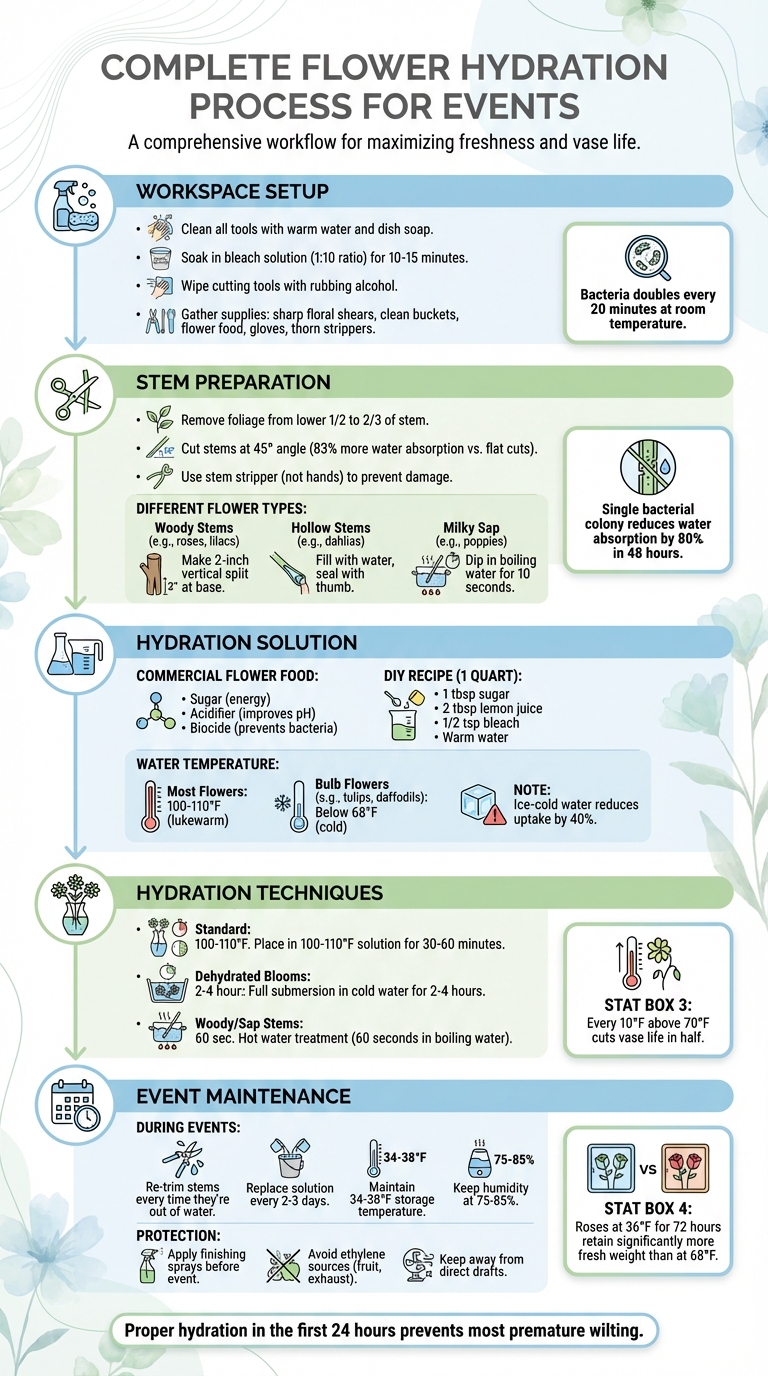
Complete Flower Hydration Process: From Preparation to Event Maintenance
7 Pro Tips for Long-Lasting Flowers
sbb-itb-2be19a4
Setting Up Your Workspace for Flower Conditioning
Keeping your workspace clean is key to preventing bacterial growth, which can shorten the vase life of flowers and hinder water absorption. Before working with any stems, it's essential to sanitize your tools, containers, and surfaces.
Clean and Sanitize Tools and Containers
Dirty tools and containers can harbor bacteria that block water uptake. Rachel Bridgwood, Co-owner of Sweet Root Village, emphasizes this point:
"Everything you do to extend the life of your blooms is to avoid bacteria growth. Starting with a dirty vessel would immediately set you back."
To get started, thoroughly scrub all buckets, vases, and containers with warm water and mild dish soap. This removes debris and any bacterial residue. After cleaning, soak them in a bleach solution - mix one part bleach with 10 parts water - for 10 to 15 minutes. Rinse everything thoroughly with clean water before use. Cutting tools should be wiped down with rubbing alcohol or a floral cleaner. Don't forget to disinfect countertops, sinks, and any processing areas to maintain a sanitary workspace.
Using sharp tools is just as important as keeping them clean. Dull blades can crush stems instead of cutting them cleanly, creating openings for bacteria and limiting water absorption.
Once everything is sanitized, set up your workspace so that all your supplies are easily accessible.
Gather Necessary Supplies
Having the right tools and supplies on hand ensures a smooth workflow. Here's what you'll need:
- Sharp floral shears or a floral knife (avoid kitchen scissors, as they can damage stems).
- Clean water buckets filled with at least 4 inches of lukewarm water.
- Commercial flower food.
- Gloves to protect your hands from thorns and dyes.
- Thorn strippers for quick foliage removal.
- Finishing sprays or anti-transpirants to help flowers retain moisture during events.
If you don’t have commercial flower food available, you can make your own. Combine 1 quart of lukewarm water with 2 tablespoons of lemon juice, 1 tablespoon of sugar, and 1/4 tablespoon of bleach.
Lastly, keep your workspace free of ethylene sources. Ripening fruit, for example, releases ethylene gas, which speeds up flower aging. By maintaining a clean and well-organized setup, you'll be ready to condition flowers effectively.
Preparing Cut Flowers for Hydration
Once your workspace is sanitized, the next step is to prepare each stem to ensure they absorb water effectively. Proper preparation is key to keeping your flowers fresh.
Remove Unnecessary Foliage
Start by stripping the leaves from the lower half to two-thirds of each stem. Make sure no foliage sits below the waterline, as submerged leaves decompose quickly and promote bacterial growth. In fact, bacteria in vase water can double every 20 minutes at room temperature. As Victoria Ahn, Florist and Owner of Designs by Ahn, explains:
"You should absolutely remove the leaves below the water line, as the leaves will eventually rot and the bacteria in the water will hurt the longevity of the flowers."
Use a stem stripper for this task instead of pulling leaves off by hand. Hand-stripping can damage the outer layer of the stem, creating wounds that allow bacteria to invade. A stem stripper removes foliage cleanly, preserving the stem's protective layer. Keep in mind that the leaves above the waterline are vital for transpiration, the process that helps pull water up the stem.
For roses, avoid removing thorns. While it might seem practical, thorn removal creates small wounds where bacteria can enter, significantly shortening the flower's vase life.
Trim Stems at an Angle
Cut each stem at a 45-degree angle. This angled cut increases the surface area for water absorption and prevents the stem from sitting flush against the vase bottom, which could block water flow. Studies show that stems cut at a 45-degree angle absorb 83% more water compared to flat cuts.
Avoid household scissors. They crush the stem’s vascular tissue - the tiny channels that transport water - effectively blocking hydration. For flowers prone to air bubbles, like roses, trim the stems underwater in a bowl of water. This prevents air from entering the stem and disrupting water uptake.
Once the stems are trimmed, adjust your approach based on the type of flower for the best results.
Conditioning Techniques for Different Flower Types
Each type of flower requires a specific method to maximize hydration:
- Woody stems (e.g., roses, lilacs, hydrangeas): After the angled cut, make a vertical 2-inch split at the base of the stem. This exposes more vascular tissue, allowing better water absorption. Amy Balsters, Floral Design Educator at The Floral Coach, advises processing woody stems in warm to hot water after removing foliage.
- Hollow stems (e.g., dahlias, amaryllis): These can trap air pockets that block hydration. To prevent this, hold the flower upside down, pour water into the hollow stem, and seal the end with your thumb before placing it upright in the vase.
- Milky sap flowers (e.g., poppies, euphorbia): These flowers release a sticky sap that can clog the stem. To address this, dip the freshly cut end in boiling water for 10 seconds or briefly expose it to a flame. This seals the cut and keeps the sap from leaking.
Mixing and Using Hydration Solutions
At Marietta Floral Design, we create hydration solutions designed to nourish flowers, balance pH levels, and keep bacteria in check. These carefully crafted formulas work hand-in-hand with stem preparation, helping your blooms stay fresh and lively for your event.
Choosing the Right Flower Food
The best flower food includes three key ingredients: sugar for energy, an acidifier (like citric acid or lemon juice) to lower pH and improve water uptake, and a biocide (such as household bleach) to combat bacteria growth. Tina Merola from Blooms by the Box highlights its importance:
"Using flower food for cut flowers is highly beneficial, providing essential nutrients, regulating pH levels, inhibiting bacterial growth, and enhancing their lifespan and quality."
If you're using commercial flower food, follow the instructions exactly. A diluted mix won’t lower the pH enough, while too strong a solution could harm your flowers. For a homemade option, mix 1 tablespoon of sugar, 2 tablespoons of lemon juice, and 1/2 teaspoon of household bleach with 1 quart of warm water. Stir until the sugar dissolves completely.
Different flowers have varying sugar needs. Most do well with a 2% sugar solution, but some, like zinnias, can suffer damage with concentrations above 1%. Tulips and daffodils, on the other hand, thrive without any sugar, while Gladiolus benefits from a stronger 4–6% solution to fully open its buds.
Once your flower food is ready, the next step is to adjust the water temperature and mixing ratios to ensure the best results.
Water Temperature and Mixing Ratios
Proper water temperature is crucial for flower hydration. For most blooms, lukewarm water (between 100°F and 110°F) works best. It helps stems absorb water faster, rehydrates thirsty flowers, and encourages buds to open.
However, bulb flowers like tulips, hyacinths, and daffodils need cold water - below 68°F - to prevent drooping and excessive stem growth. Using ice-cold water on other flowers can backfire, causing vascular constriction and reducing water uptake by as much as 40%.
To maintain freshness, replace your hydration solution every two to three days. In DIY mixes, bleach breaks down quickly, and bacteria can multiply fast. Even a single bacterial colony can cut water absorption by 80% within 48 hours.
Hydration Techniques for Different Scenarios
Different conditions call for specific hydration methods, especially when working with fresh or stressed flowers. At Marietta Floral Design, techniques are adjusted based on the state of the blooms.
Standard Stem Placement
For freshly cut flowers, start by trimming the stems at a 45° angle under running water. Then, place them in a hydration solution warmed to 100–110°F for 30–60 minutes. This encourages quick water absorption, making the flowers ready for transfer to a cooler display area. As Fiore Designs highlights:
"A drooping rose is often just thirsty. Quick action can bring it back within an hour."
However, if flowers are severely wilted or face additional hydration challenges, alternative approaches are necessary.
Submersion for Dehydrated Blooms
When dealing with wilted or dehydrated flowers, full submersion can work wonders. Some blooms, like hydrangeas and roses, can absorb water through their petals, making this method especially effective. For hydrangeas, fill a clean sink with ice-cold water and completely submerge both the stem and the flower head for 2 to 4 hours - or even overnight. Jennifer Petritz, President of the American Hydrangea Society, explains:
"Fill your sink with ice‐cold water and submerge the entire flower stem, flower head and all. Leave them at least a couple of hours or even overnight. Most of the time, they will perk back up after an extended bath."
For wilted roses, try a warm water soak at 100–110°F for about 30 minutes. After soaking, re-cut the stems underwater and place them in a fresh hydration solution.
Hot-Water Treatment for Specific Flowers
Certain blooms, particularly those with woody stems or sap-producing stems, benefit from hot-water treatment to overcome blockages that limit water uptake. Flowers like lilacs, viburnums, and poinsettias respond well to this method. For hydrangeas, after trimming and slitting the stem base, dip the bottom inch in boiling water for 60 seconds before placing it in a vase. For poinsettias, dip the bottom 2 inches of the stem in boiling water for about 10 seconds to seal the sap, then immediately transfer them to warm water. Amy Balsters from The Floral Coach advises:
"Woody stems are best handled by processing into warm to hot water and removing the foliage so the stems drink."
To protect the flower heads during this process, wrap them in paper to shield them from steam.
Maintaining Hydrated Flowers During Events
Cut flowers, even when hydrated, lose moisture through transpiration, particularly during lengthy events. Keeping them fresh involves consistent stem care, managing the environment, and using protective treatments. One essential practice is re-trimming stems to ensure efficient water absorption.
Re-Trimming Stems for Long-Lasting Freshness
When flowers are out of water, their stems can develop a seal that blocks water absorption. By trimming about an inch off the stem, you expose fresh tissue, allowing the flowers to hydrate more effectively. Floral Design Educator Amy Balsters emphasizes:
"When you have stems out of water or laying on tables and place them in water without recutting them, they won't drink as well so remember to RECUT those stems each time they are out of water."
To maximize water uptake, always cut stems at a 45° angle and do so underwater to prevent air from entering the stem. During events, re-cut stems if they've been exposed to air for extended periods. Use sharp tools like bypass pruners, floral shears, or a floral knife - avoid kitchen scissors as they can crush the stem's vascular system. Re-trimming every 2–3 days or with every water change also helps reduce microbial growth.
Temperature and Humidity Control
Temperature and humidity play a crucial role in preserving flower freshness. Most cut flowers thrive in temperatures between 34°F and 38°F with humidity levels of 75% to 85%. These conditions slow down their metabolism, reduce respiration, and minimize water loss. For instance, roses stored at 36°F for 72 hours retain more fresh weight and use significantly less water compared to those kept at 68°F. However, tropical flowers are more delicate and should be stored at 55°F to 60°F to prevent chilling damage.
Keep arrangements away from direct drafts, as air currents can speed up moisture loss. Additionally, avoid exposing flowers to ethylene sources like ripening fruit, car exhaust, or cigarette smoke, as these can accelerate aging. For events spanning multiple days, storing arrangements overnight in a refrigerator or professional cooler can "reset" the blooms. In hot, dry, or overly air-conditioned spaces, a humidifier can help maintain the right moisture levels.
Using Finishing Sprays and Anti-Transpirants
Finishing sprays provide an added layer of protection by sealing in moisture. For arrangements with a continuous water source, systemic treatments like Finishing Touch (FloraLife) are absorbed through the leaves and petals, nourishing flowers as they bloom. On the other hand, topical sprays such as Crowning Glory (FloraLife) create a wax-like barrier to lock in moisture, making them perfect for corsages, boutonnieres, and hand-tied bouquets.
Floral expert Sharon McGukin explains the difference:
"Finishing Touch is a systemic hydrating treatment that helps nourish flowers that are continuing to open... Crowning Glory is a topical hydrating treatment that helps to hold flowers in their current state of freshness."
Mist arrangements immediately after applying these treatments and again just before the event begins. If hosting outdoor gatherings, avoid covering flowers with plastic, especially dark-colored materials, as they can trap heat. Instead, use a damp, light-colored cloth to shield arrangements from sunlight and keep them cool.
Conclusion
Keeping flowers properly hydrated is the key to creating stunning floral arrangements that last. Essential hydration techniques work together to combat the biggest threats to floral longevity: bacteria, dehydration, and ethylene. The first hour is especially critical - most premature wilting stems from avoidable mistakes made in the first 24 hours.
This careful approach not only keeps flowers looking fresh but also extends their lifespan. As floral design educator Amy Balsters explains:
"Conditioning flowers when they come in and keeping them alive with excellent care and handling techniques makes your flowers last longer and allows for more successful designs".
The difference between arrangements that wilt halfway through an event and those that remain vibrant from start to finish lies in consistent preparation and attention to detail.
In Marietta's hot and humid climate, precision in hydration is even more important. For every 10°F rise above 70°F, the vase life of cut flowers is reduced by half. Allowing blooms to hydrate for 4 to 12 hours, maintaining clean water, and controlling the environment are essential steps to ensure your arrangements endure an all-day celebration.
Marietta's unique climate demands an expert touch, and local knowledge ensures these methods are carried out correctly. Whether you're handling the flowers yourself or relying on a professional florist, the difference is in the details. At Marietta Floral Design, the combination of expert preparation and locally sourced, hand-delivered flowers ensures your arrangements remain fresh and vibrant, creating a lasting impression for your special occasion. With every conditioned stem, your designs will radiate beauty and freshness throughout your event.
FAQs
How far in advance should I hydrate event flowers?
When your event flowers arrive, it's important to hydrate them right away - ideally 2–3 days before the big day. Start by unpacking them immediately. Then, trim the stems at a 45-degree angle and place the flowers in clean, cool water mixed with flower food. This process helps them rehydrate and fully bloom, ensuring they look fresh and lively when it's time for the event. Proper hydration is key to preventing wilting and keeping the flowers looking their best.
Which flowers need cold water vs warm water?
Freshly cut flowers absorb water more efficiently when placed in warm water (100–110°F) because it encourages better hydration. However, for flowers that are already in a vase, cold or room temperature water works best to help maintain their freshness and prolong their beauty. To put it simply: warm water is ideal for freshly cut stems, while cooler water helps extend the life of arranged flowers.
What’s the fastest way to revive wilted flowers?
To bring wilted flowers, like hydrangeas, back to life, start by cutting the stems at an angle using a sharp knife or scissors. Next, place the freshly cut stems in warm water mixed with floral preservative or flower food. For hydrangeas specifically, you can also fully submerge the blooms in water to help them rehydrate. Boosting humidity around the flowers can further support their recovery and keep them looking fresh longer.