


Low-waste floral packaging is reshaping how florists approach bouquet wraps and shipping materials, moving away from plastics to options like recycled paper, compostable wraps, and reusable fabrics. These changes address critical issues, including the 200,000 tons of plastic waste generated annually by the floral industry, with 40% of it being non-recyclable. Customers are taking notice - 70% prefer eco-friendly packaging, and 60% are willing to pay more for it.
Key takeaways:
- Replace plastic wraps with recycled paper, biodegradable films, or fabric wraps.
- Compostable options like cellulose wraps decompose in 12 weeks but often require industrial composting.
- Reusable materials, like burlap or linen, are ideal for weddings and events.
- Eco-friendly packaging can reduce waste, lower costs, and meet new regulations, such as the EU's 2030 recyclable packaging mandate.
For florists, switching to low-waste packaging is not just environmentally conscious - it’s a smart way to align with customer values and improve operations. Whether it's using FSC-certified kraft paper for local deliveries or plant-based films for long-distance shipping, these steps can make a meaningful difference.
Why Florists Should Use Low-Waste Packaging
Reducing Waste and Carbon Emissions
The floral industry's reliance on traditional plastic packaging creates significant environmental challenges. For instance, conventional floral foam contains formaldehyde and breaks down into microplastics, which can contaminate waterways and even enter the food chain. By switching to paper-based or biodegradable alternatives, florists can cut down on waste and reduce emissions. Regulations like the EU Packaging and Packaging Waste Regulation, which began in February 2025, are pushing for all packaging to be recyclable by 2030. These changes not only align with environmental priorities but also cater to the growing customer demand for sustainable practices.
Meeting Customer Demand for Eco-Friendly Options
Today's flower buyers care about sustainability. Studies reveal that 60% of customers are willing to spend more on flowers when they know the packaging is eco-friendly, and 49% specifically value sustainable packaging and delivery methods. Using such packaging allows florists to visibly showcase their commitment to responsible practices. This is especially relevant in high-end markets, such as weddings and events, where eco-conscious couples actively seek florists who align with their values.
Zero-waste flower design isn't just a trend. It's a mindset.
- Elena Shishulina
Improving Business Operations and Reducing Costs
Switching to low-waste packaging offers more than just environmental and consumer benefits - it can also improve business efficiency and cut costs. Using optimized packaging materials and sizes reduces dimensional weight charges and minimizes wasted supplies. Streamlined options, like water-activated tape and easy-to-assemble sleeves, can speed up the packing process. Replacing bulky boxes with recycled mailers saves space in the shop, while reusable transport units for B2B deliveries eliminate the ongoing expense of single-use containers. Additionally, reducing packaging volume lowers waste disposal costs, and better packaging protects delicate blooms during transit, reducing losses from damaged flowers.
sbb-itb-2be19a4
Kraft Paper Wrap: The Secret to Studio-Style Bouquets
Materials for Low-Waste Floral Packaging
Florists have several environmentally-conscious options for wrapping bouquets and protecting floral arrangements. These materials not only align with sustainable practices but also cater to various needs, from aesthetic appeal to functional protection.
Recycled Paper and Cardboard
Recycled paper is a straightforward and budget-friendly choice for florists aiming to reduce waste. Many of these papers are made from renewable resources like bamboo or wood fibers, boasting recycling rates above 80%.
Adding personal touches, such as stamps, twine, or natural decorations, can elevate the look of recycled paper wraps. A great example is Peterkort Roses, a grower in Hillsboro, which swapped out plastic sheets for brown butcher paper and cotton string in 2019 for their rose bunches. FSC-certified kraft paper, while only slightly more expensive than conventional options (5–10% more), has limitations. It doesn’t hold up well in humid conditions or during extended deliveries, making it better suited for dry wraps and local hand-delivered arrangements.
Compostable Cellulose Wraps
Cellulose-based films provide the transparency of plastic while being compostable. Made from wood pulp or agricultural byproducts, these wraps, such as NatureFlex, offer moisture protection and decompose completely in composting systems. For example, Chrysal's Arrive Alive® Eco wrap is a compostable hydration wrap made from renewable materials that maintains moisture levels and breaks down within 12 weeks. It even reduces water use by 40% compared to traditional wet packaging. However, industrial composting facilities are often required for these wraps to decompose effectively.
Biodegradable Flower Sleeves
Flower sleeves made from poly lactic acid (PLA), derived from plants like corn or sugarcane, provide a biodegradable alternative to petroleum-based plastics. These sleeves protect flowers during transit and can be composted in industrial facilities. Dutch growers have successfully adopted recycled plastic sleeves to cut down on virgin plastic use. That said, PLA sleeves are generally 20–40% more expensive than traditional plastic sleeves. To ensure compostability, look for certifications like BPI or ASTM D6400.
Plant-Based and Algae Films
Emerging materials like BioFlex film and mycelium packaging are pushing sustainable floral packaging to new levels. BioFlex, made from cassava and corn starch, is ideal for tropical flowers as it withstands up to 85% humidity. Colombian rose growers have noted fewer damaged blooms when using BioFlex compared to petroleum-based films. This material also biodegrades quickly in landfills.
Another innovative option is mycelium packaging, crafted from mushroom roots. Ecovative Design, for instance, has partnered with wholesalers to replace plastic foam with Grow.bio™ mushroom root packaging. This USDA-certified material grows in just seven days and decomposes in home compost within a month. While mycelium packaging costs 15–25% more than polystyrene foam, its home-compostable nature makes it particularly appealing.
Reusable Fabric Wraps
Fabrics like burlap, cotton, and linen offer a rustic, elegant look and are fully biodegradable. These wraps can be reused by customers for other purposes, making them a sustainable option for high-end arrangements, weddings, and special events. To enhance their eco-friendliness, florists can source fabrics from sustainable farms and use non-toxic dyes.
Some florists are even introducing deposit-refund systems to encourage customers to return fabric wraps for reuse. Pieter Sluiter, General Manager of Koen Pack USA, highlighted the growing parity in cost between conventional and sustainable materials:
Right now, it's a fair playing field, and the pricing between conventional and sustainable is about the same. That makes it an easier conversation with retailers.
This approach supports a circular economy, keeping materials in use longer and reducing waste.
Comparing Low-Waste Packaging Materials
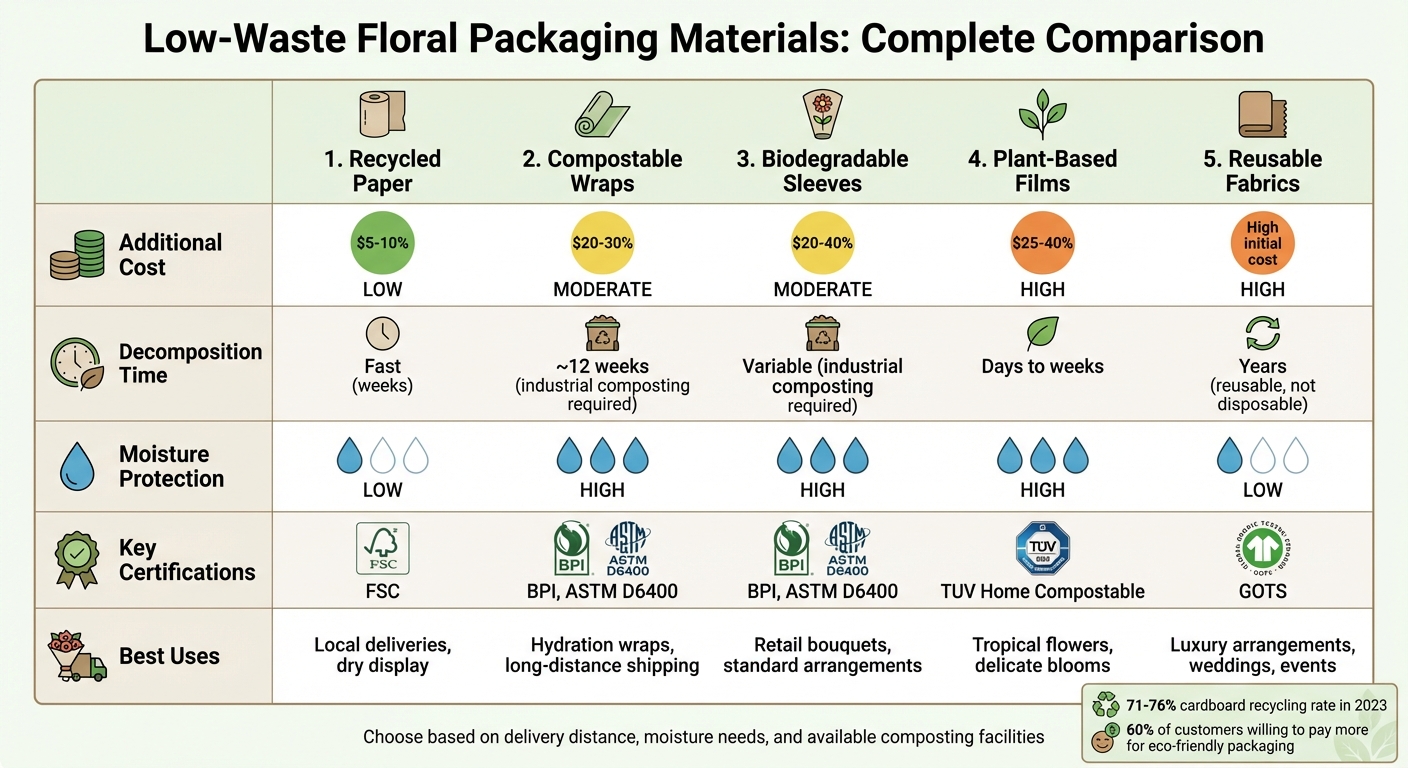
Low-Waste Floral Packaging Materials Comparison Guide
Let’s break down the costs, performance, and environmental impact of different low-waste packaging materials. This comparison will help you choose the best option based on your budget, moisture protection needs, and how the material breaks down after use.
Cost Overview
The price tag for eco-friendly packaging varies depending on the material. Recycled paper is the most affordable, costing just 5–10% more than standard paper. Compostable cellulose wraps and biodegradable PLA sleeves fall in the middle range, with costs running 20–40% higher than conventional plastic. Plant-based films are pricier, while reusable fabric wraps require the biggest upfront investment. However, fabrics can save money over time if you implement deposit-refund systems. Each material has specific strengths and weaknesses, so it’s important to weigh these factors against your delivery and sustainability goals.
Moisture Protection
Keeping flowers fresh is all about moisture retention. Recycled paper is great for dry, short-distance deliveries, but compostable cellulose wraps are far better for maintaining moisture, lasting up to 120 hours. Similarly, biodegradable PLA sleeves perform like traditional plastic in this area. On the other hand, reusable fabrics offer minimal moisture protection, making them better suited for decorative or luxury arrangements rather than long-distance shipping.
Decomposition Timelines
Disposal options are another key factor. Recycled paper can break down quickly and is easily processed in recycling systems. For example, cardboard recycling rates were as high as 71–76% in 2023. Compostable cellulose wraps decompose within 12 weeks but need industrial composting facilities. Biodegradable PLA sleeves also require industrial conditions to avoid microplastics, as the Sustainable Floristry Network warns:
The idea of something being biodegradable seems good, until we learn that the word doesn't mean much when it comes to plastic.
Plant-based films break down faster, often within days or weeks under the right conditions, while mycelium packaging can decompose in home compost within a month. Lastly, reusable fabrics avoid single-use waste entirely, staying in circulation for years.
Material Comparison Table
Here’s a quick reference table to help you compare the options:
| Material | Additional Cost | Decomposition Time | Moisture Protection | Key Certifications | Best Uses |
|---|---|---|---|---|---|
| Recycled Paper | Low (+5–10%) | Fast (weeks) | Low | FSC | Local deliveries, dry display |
| Compostable Wraps | Moderate (+20–30%) | ~12 weeks (industrial) | High moisture | BPI, ASTM D6400 | Hydration wraps, long-distance shipping |
| Biodegradable Sleeves | Moderate (+20–40%) | Variable (industrial required) | High | BPI, ASTM D6400 | Retail bouquets, standard arrangements |
| Plant-Based Films | High (+25–40%) | Days to weeks | High | TUV Home Compostable | Tropical flowers, delicate blooms |
| Reusable Fabrics | High (initial) | Years (reusable) | Low | GOTS | Luxury arrangements, weddings, events |
Final Tips
To avoid falling for misleading claims, always check for reliable certifications. Look for labels like BPI or ASTM D6400 on compostable materials and GOTS for fabrics. Also, consider your delivery routes. For local deliveries where recycling is available, recycled paper is an excellent choice. For long-distance shipping, cellulose wraps or plant-based films are better suited, thanks to their superior moisture retention.
How to Implement Low-Waste Packaging in Your Floral Business
Transitioning to low-waste packaging is best done gradually. Start with the most visible elements, such as sleeves and wraps, and only move away from traditional materials once you're confident your new system is effective. Partnering with reliable, certified suppliers is a crucial first step.
Finding Certified Eco-Friendly Suppliers
The cornerstone of any sustainable packaging strategy is sourcing materials from certified suppliers. Look for certifications like FSC (Forest Stewardship Council) for paper-based products and BPI (Biodegradable Products Institute) or ASTM D6400 for compostable materials. These certifications ensure you're getting products that are truly eco-friendly, not just marketing claims. Ask suppliers for technical details about biodegradation timelines and composting conditions.
For example, a grower in Hillsboro replaced plastic sheets with brown butcher paper and swapped rubber bands for cotton string to ensure all packaging was biodegradable. As they put it:
I kept hearing from florists about the waste in the floral industry, and it was starting to get to people.
Additionally, ensure your packaging includes clear material identification labels. A study revealed that 82% of retail floral packaging lacked this information, complicating recycling efforts.
Packaging Methods That Preserve Freshness
Switching to eco-friendly packaging doesn’t mean compromising on flower freshness. To maintain quality, you need to manage moisture, ventilation, and temperature effectively. For paper-based boxes, consider adding moisture-resistant coatings like Liquiguard to prevent cardboard from weakening due to condensation or flower respiration. Ventilation holes can also help reduce condensation and maintain freshness.
Hydration is another key factor for cut flowers. Eco-friendly hydration sets, which combine absorbent wraps with compostable bags, can keep stems moist without the mess of traditional plastics. Chrysal’s Arrive Alive® Eco wrap is a great example - it’s fully compostable, maintains 95% humidity for up to 120 hours, and uses 40% less water than conventional wet packaging.
To secure flowers during transit, replace non-recyclable foams with cardboard cradles or inserts. These can prevent crushing and are better suited for recycling. Be sure to test all materials for their performance during temperature changes, especially when flowers move from cold storage to warmer environments, as condensation can lead to wilting.
Adapting Packaging to Your Delivery System
Your delivery method will play a big role in choosing the right eco-friendly packaging materials. For local deliveries, where recycling systems are more accessible, opt for FSC-certified Kraft paper and recycled cardboard. For long-distance shipping, compostable cellulose wraps or plant-based films are ideal for retaining moisture over extended periods.
Standardizing box sizes can also improve efficiency. Uniform dimensions allow you to fit up to 20% more flowers per pallet and ensure better cold air circulation during sea freight. Use vertical boxes for potted plants or bouquets in liquid to prevent leaks, and horizontal "lay flat" boxes for standard cut flowers to maximize space. For eCommerce orders, design packaging to align with specific courier size requirements.
For local deliveries, a deposit-refund system for glass vases or ceramic pots can be a smart way to promote reuse. This works particularly well for loyal customers or event clients who appreciate sustainable practices. At Marietta Floral Design, we’ve incorporated low-waste packaging into our same-day delivery service across Marietta, Kennesaw, Acworth, and Metro Atlanta. By collaborating with certified suppliers and testing materials tailored to Georgia’s climate, we ensure our custom designs and bridal bouquets arrive fresh while staying true to our commitment to sustainability and quality.
How Marietta Floral Design Uses Low-Waste Packaging
At Marietta Floral Design, every step of the process is guided by a commitment to sustainability. The studio sources its blooms from a local supplier just 4 miles away. This not only cuts down on transportation emissions but also guarantees fresh flowers for customers in Marietta, Kennesaw, Acworth, and the Metro Atlanta area. All plastic sleeves and cardboard boxes from deliveries are recycled, while flower stems and leaves are collected in compostable yard waste bags instead of heading to the landfill. Even hydration water is reused, helping to nurture local gardens.
Eco-Friendly Wraps for Custom Bouquets
Sustainability doesn’t stop at sourcing - it’s woven into the bouquet designs themselves. Hand-tied bouquets form the basis of Marietta Floral Design’s custom arrangements. This method avoids the need for plastic structures or floral foam, creating a natural "just-picked" garden vibe.
For wrapping, recycled paper and natural ribbons bring a clean, garden-inspired finish to the Bright Arrangement, Neutral Bouquet, and Pastel Bouquet collections, all starting at $55. Additional decorative touches like burlap, lace, or heirloom jewelry add charm without generating extra waste, staying true to the studio’s low-waste philosophy. Even business cards and proposals are printed on recycled paper, while contracts and communications are handled digitally to cut down on paper use.
Low-Waste Solutions for Weddings and Events
This eco-conscious approach also shines in Marietta Floral Design’s event services. For weddings and events, the studio prioritizes rentals to avoid single-use items. Vases, lanterns, votives, and pedestals are reused across multiple celebrations, perfectly complementing their low-waste packaging practices.
Bridal bouquets, priced between $275 and $300, are crafted using hand-tied techniques without floral foam. Bridesmaid bouquets, costing around $100, and centerpieces priced between $125 and $300, rely on sustainable mechanics like chicken wire, pin frogs, or moss instead of non-biodegradable materials. Event packages also include on-site setup and cleanup, ensuring all compostable waste is properly handled.
Conclusion
Sustainable packaging has become more than just an ethical choice - it’s a smart business move that aligns with both environmental goals and customer expectations. Throughout this guide, we’ve explored how decisions like choosing eco-friendly wraps or sourcing locally can transform a floral business into a greener, more efficient operation.
The numbers back this up: 60% of consumers are willing to pay a premium for flowers that are responsibly grown and packaged. Beyond meeting customer demands, these practices help florists prepare for stricter regulations, such as the EU's Packaging and Packaging Waste Regulation, set to take effect in August 2026. The result? Environmental benefits that also translate into tangible business gains.
While eco-friendly materials may come with slightly higher upfront costs, they often lead to long-term savings. By reducing waste disposal fees and minimizing product losses, these choices prove to be financially savvy in the big picture. For example, Marietta Floral Design showcases how thoughtful practices can create a seamless low-waste system. By sourcing flowers from a local supplier just 4 miles away, recycling all incoming packaging, and composting organic waste, they’ve built an operation that’s both efficient and eco-conscious. Their hand-tied bouquets - starting at $55.00 - use recycled paper and natural ribbons in place of plastic, and their wedding and event services follow the same sustainable principles.
In Metro Atlanta, low-waste packaging is redefining the floral industry. Florists who adopt these methods are not only meeting today’s customer expectations but also setting themselves up for long-term success. Whether it’s wrapping a single bouquet or planning an elaborate wedding, every sustainable choice contributes to a healthier planet - and a thriving business.
FAQs
Which low-waste wrap works best for my delivery distance?
Finding the right low-waste wrap for flowers means balancing protection, breathability, and environmental responsibility. For short trips, lightweight options like kraft paper or recycled paper work well - they allow airflow to keep flowers fresh. For longer deliveries, sturdier biodegradable kraft paper or moisture-resistant wraps provide extra durability and protection.
If versatility is a priority, customizable solutions like paper rolls can adapt to different flower arrangements. Plus, using recyclable or compostable materials ensures your flowers stay secure while reducing waste.
Do compostable sleeves actually break down at home?
Compostable sleeves can break down at home, but only if they meet the right standards for biodegradability. That said, not all of these sleeves are made for home composting. Always check the product label to see if it’s designed to decompose in a home composting setup.
How can I switch to low-waste packaging without raising prices?
Switching to low-waste packaging doesn’t have to break the bank. Start by choosing sustainable materials like recyclable butcher paper or compostable cotton string as alternatives to plastic wraps. These options are not only better for the environment but can also be cost-effective.
Another smart move is to streamline your packaging process. Conducting life-cycle assessments can help pinpoint areas where you can cut costs while reducing waste. On top of that, training your staff on proper packaging techniques ensures materials are used efficiently, further lowering expenses.
By focusing on these practical steps, you can make your packaging greener and keep your budget intact.