


Floral arches can be stunning, but many traditional designs harm the planet. This guide shows you how to create beautiful, eco-friendly floral arches without sacrificing style.
Here’s what you’ll learn:
- Ditch floral foam: Use reusable materials like chicken wire, moss, and water tubes instead of single-use foam.
- Go local: Choose flowers grown nearby to cut down on carbon emissions and ensure freshness.
- Pick durable plants: Hardy greenery like eucalyptus or magnolia lasts longer without constant water.
- Minimize waste: Compost leftover flowers and store reusable materials for future projects.
How To Make A FOAM FREE Floral Arch Design
sbb-itb-2be19a4
Selecting Sustainable Materials for Floral Arches
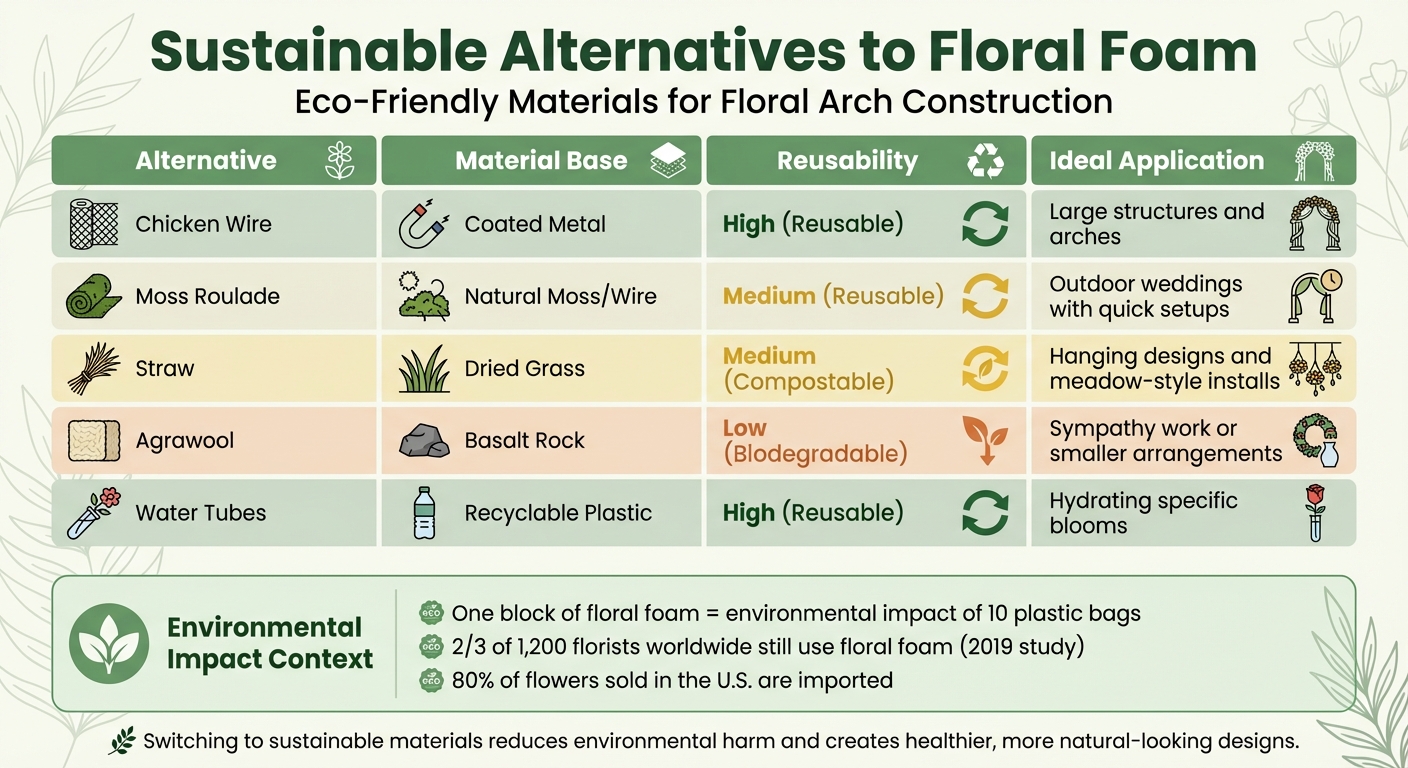
Sustainable Alternatives to Floral Foam for Arch Design
Building an eco-friendly floral arch starts with making thoughtful material choices. Traditional floral foam, while convenient, is harmful to the environment - one block has the same impact as about ten plastic bags and contains harmful chemicals. Despite these issues, a 2019 study by the Royal Melbourne Institute of Technology revealed that two-thirds of 1,200 florists worldwide still use it. Switching to greener options not only reduces environmental harm but can also be better for your health. Below, you'll find practical alternatives, the advantages of sourcing local flowers, and a checklist of tools to help you create a sustainable floral arch.
Alternatives to Floral Foam
There are several effective substitutes for floral foam that are kinder to the planet and versatile for different designs:
-
Chicken Wire: This classic option is both reusable and recyclable. It can be shaped into cylinders or cages to securely hold stems, making it ideal for large installations. For extra moisture retention, you can layer moss over the wire to create a "moss roulade", which is especially useful for outdoor events. Designer Tobey Nelson shares her experience:
"The moss roulade is perfect for outdoor weddings with a short set up window. I commonly make mine in the studio the day before. When I arrive on site, I simply attach it to the structure, fine-tune the design, and cover my mechanics - then I'm done!"
- Straw: This lightweight, compostable material is budget-friendly and can be soaked to create a stable base. It works well for hanging designs or meadow-style installations when stuffed into chicken wire forms.
- Agrawool: Made from spun basalt rock, Agrawool mimics the function of floral foam but naturally breaks down after use. It’s a good choice for sympathy arrangements or smaller designs.
- Water Tubes and Funeral Cones: These are great for keeping individual blooms hydrated. Both are reusable and recyclable, offering a practical solution for focal flowers.
| Alternative | Material Base | Reusability | Ideal Application |
|---|---|---|---|
| Chicken Wire | Coated Metal | High (Reusable) | Large structures and arches |
| Moss Roulade | Natural Moss/Wire | Medium (Reusable) | Outdoor weddings with quick setups |
| Straw | Dried Grass | Medium (Compostable) | Hanging designs and meadow-style installs |
| Agrawool | Basalt Rock | Low (Biodegradable) | Sympathy work or smaller arrangements |
| Water Tubes | Recyclable Plastic | High (Reusable) | Hydrating specific blooms |
Why Use Locally Sourced Flowers
Choosing local flowers is another step toward sustainability. Around 80% of flowers sold in the U.S. are imported, requiring energy-intensive refrigerated transport that contributes to carbon emissions. Locally grown blooms, like those from Marietta Floral Design, are often harvested just a day before delivery, ensuring freshness and longer-lasting arrangements compared to flowers that spend days in transit.
Local flowers are also better suited to their environment, often requiring fewer pesticides and less water. In Georgia, for example, blooms like Camellia or Magnolia thrive naturally and perform well in foam-free designs. Sustainable florist Greta Lewanski emphasizes this point:
"Local and seasonal flowers are more fresh, more beautiful and more earth-friendly!"
By choosing local, you not only reduce your carbon footprint but also support nearby growers and create designs that reflect the natural beauty of your region.
Tools and Supplies Checklist
Creating a sustainable floral arch calls for specific tools and materials designed to minimize waste:
- Structural Tools: Coated chicken wire (to prevent rust and protect hands), wire cutters, and heavy-duty scissors are essential. Use hemp twine or compostable wire instead of plastic zip ties for a biodegradable option.
- Hydration Supplies: Stock up on water tubes, funeral cones, and waterproof bowl tape to keep flowers hydrated and secure.
- Fillers and Foliage: Natural fillers like moss, straw, or wood wool are excellent choices. For greenery, hardy foliage like Salal, Camellia, and Magnolia can last without constant water.
- Stability Enhancers: For heavier designs, use wet sand or bricks hidden in the base to provide extra stability without adding unnecessary waste.
When working with dense materials like moss roulades, pre-poke holes with a sturdy stem or skewer to make inserting delicate flowers easier. With the right tools and a little creativity, you can craft a stunning floral arch that’s as kind to the planet as it is beautiful.
How to Assemble a Sustainable Floral Arch
Now that you've chosen your sustainable materials, it’s time to bring your floral arch to life. Typically, an arch stands about 7–8 ft tall and 5–6 ft wide - just the right size to frame a couple without obstructing photos. The frame you select - whether wood for sturdiness, metal for a modern vibe, or reusable plumbing fixtures for a floating effect - sets the tone for your design. Each step in the process focuses on reducing waste and avoiding single-use materials.
Setting Up the Base Structure
Start by securing your frame based on the surface it will stand on. For soft ground like grass or dirt, drive stakes or rebar into the ground to anchor the legs. On harder surfaces like concrete or tile, use ballast options such as sandbags, heavy planters, or weighted plywood bases. Once the frame is in place, test its stability by applying firm pressure. If it wobbles even slightly, add more weight or bracing to keep it steady.
Next, create a foundation using chicken wire. Roll the chicken wire into a tube shape, attach it to the frame, and trim any sharp edges to avoid injuries. Annie Heath of Ida Blooms showcased this foam-free method in July 2018, zip-tying rolled chicken wire to a frame and filling it with hardy greens to shape the structure before adding water sources for flowers. Greta Lewanski also highlights the benefits of renewable materials:
"In both arches, I used completely renewable materials (chicken wire and floral water tubes) to create the form in which to hold the flowers and foliage."
For flowers that need constant hydration, use reusable funeral cones. Drill horizontal holes into the cones, zip-tie them to the frame, and fill them with water. These cones serve as secure anchoring points for your focal blooms.
Adding Foliage and Greenery
Once your base structure is ready, start layering greenery. This step defines the arch’s shape and conceals the mechanics. Use hardy foliage like salal, camellia, magnolia, or ruscus, which can endure long periods without water. Place heavier greens at the base for support and lighter, trailing greenery like eucalyptus or ivy toward the top to create a flowing, organic look.
Insert stems into the chicken wire grid, securing them with floral wire to keep them in place. In January 2022, Kelly James of Lilac and Sage crafted a free-standing arch for a Rocky Mountains shoot, using seven full bags of smilax to completely cover the chicken wire. The result? A sturdy structure that withstood strong winds while keeping flowers in place. She reflects:
"When flowers are designed as if they have been growing on a structure organically for years, my heart and creativity soar!"
Ensure the greenery covers not just the front but also the sides and back of the arch. Reserve at least one bunch of foliage to fill any gaps or exposed spots after the flowers are added.
Adding Flowers and Final Details
With a lush green base in place, it’s time to add flowers for that show-stopping finish. Prepare your flowers in water tubes beforehand to speed up assembly on-site. Insert stems into the chicken wire at a 45-degree angle to keep them secure and create a natural, tapered effect.
Start with focal flowers to establish the structure, then fill in gaps with smaller blooms. Finish with delicate touches like vines or trailing greenery for texture. For smaller flower bunches where water tubes are impractical, wrap stems in wet paper towels and compostable wrap before placing them in the chicken wire. Annie Heath of Ida Blooms notes:
"I find my centerpieces, arbors, and installs look more natural without a brick of foam at the base."
Once all the flowers are in place, gently pull on a few stems and give the arch a light shake to ensure everything is secure. Use your reserved greenery to hide any visible zip ties, wires, or water tubes. Don’t forget to finish the back of the arch with leftover flowers and foliage to ensure it looks polished from every angle.
Best Plants and Flowers for Sustainable Arches
Picking the right plants is crucial when creating a foam-free arch. A helpful guideline is the "woody-waxy" rule - plants with woody stems and waxy leaves are excellent at retaining moisture and resisting wilting, even without constant hydration. These materials can stay fresh for 7 to 12+ hours out of water, making them ideal for avoiding floral foam while keeping your arch vibrant throughout the event. By combining sustainable assembly techniques with resilient plant choices, you can ensure your arch looks stunning from start to finish.
Foliage Options
Sturdy greenery is the foundation of any sustainable arch. Varieties like smilax, ruscus, and eucalyptus are top choices because they hold moisture well and maintain their structure for over 12 hours without water. These options not only support eco-friendly practices but also cover large areas beautifully while staying fresh.
For added texture and structure, consider using magnolia, boxwood, salal, and camellia. Magnolia's thick, waxy leaves and woody stems make it exceptionally durable. Boxwood provides a dense, structural base that lasts up to 8 hours. Salal, also called lemon leaf, features leathery foliage perfect for concealing mechanics, while camellia offers a softer yet equally long-lasting look. Conifers like pine, spruce, and cedar are also excellent choices, as they naturally retain moisture and are easy to compost. Linda D'Arco of Little Farmhouse Flowers highlights the importance of choosing tough materials:
The flowers we put into an arbor that is going to be in full sun/wind/rain... without water, for hours at a time simply can not be the same dainty little things that we use to top off centerpieces
Durable and Locally Grown Flowers
Once your greenery is in place, selecting hardy blooms is the next step for a long-lasting, eco-friendly design. Look for flowers with firm blooms and sturdy stems. Roses (both standard and spray), chrysanthemums, alstroemeria, and cymbidium orchids are all excellent choices, as they can hold up for 8+ hours without direct water. Lisianthus offers a delicate yet durable option, while statice and carnations bring texture and bold color without wilting.
Locally sourced flowers, such as those from Marietta Floral Design, are another fantastic option. These blooms are often harvested just a day before reaching you, ensuring better hydration and longer-lasting freshness compared to imported flowers that travel thousands of miles. Plus, they help reduce carbon emissions and support ethical farming practices in the Metro Atlanta area. Marietta Floral Design’s offerings exemplify these qualities, blending beauty with environmental responsibility.
Whenever possible, choose mature stems - older, woodier growth tends to hold up far better than younger, softer stems. To further extend the life of your finished design, you can apply moisture-sealing products like Crowning Glory.
Maintenance, Teardown, and Reuse
Keeping Flowers Fresh During Events
To keep your floral arch looking its best, aim to install it just 1–2 hours before the event. This helps minimize exposure to heat, wind, and sunlight, which can quickly take a toll on the blooms. If the event is outdoors, bring along a spray bottle and mist the flowers regularly - especially if the weather gets warmer or winds pick up.
For long-lasting results, choose hardy flowers and greenery like roses, eucalyptus, and magnolia. These foam-free materials can hold up for 8–12 hours or more without direct water. To further protect your arrangements, apply an anti-transpirant spray like Crowning Glory to lock in moisture. Floral designer Susan McLeary shares her perspective on event florals:
I set them up to look fresh for the 6–8 hours they'll be viewed for and compost them after the event
When the event wraps up, it’s time to focus on dismantling the arch with care and consideration.
Responsible Teardown Methods
Sustainability doesn’t end with the event. Start by separating organic waste from reusable materials as soon as possible. Placing a tarp under the arch during teardown can catch falling leaves and petals, making composting much simpler. All floral waste - such as flowers, foliage, and stems - should go to a farm or local composting facility instead of a landfill. Linda D'Arco of Little Farmhouse Flowers emphasizes this approach:
I'm typically able to walk away from an event with a handful of trash... all re-claimable materials can be re-used and all compostable materials go into composting here at our farm
For reusable items like water tubes and funeral cones, clean them thoroughly with disinfectant. Flatten chicken wire for easy storage. Replace single-use plastic zip ties with reusable options or biodegradable twine. Before composting, think about donating gently used blooms to nursing homes or shelters through services like Repeat Roses.
Once the teardown is complete, make sure to properly store reusable materials for future projects.
Storing Materials for Future Use
Investing in reusable frames and components is a smart, eco-conscious choice. Metal modular arch kits, for example, can be taken apart and stored flat in a dry location. Keep things organized by placing cleaned water tubes, funeral cones, and chicken wire in labeled bins. Don’t forget to inspect and empty sandbags or weighted planters to avoid leaks or damage. If you used potted plants, replant them in a garden or greenhouse. Dried flowers can also be preserved for up to five years. Annie Heath of Ida Blooms offers this advice:
When it's time to tear down, try to clean and save the funeral cones, water tubes, and even the chicken wire to use on your next design!
Properly storing and reusing materials not only saves money but also reduces waste, making your future designs both practical and environmentally friendly.
Conclusion
Main Points to Remember
Creating a sustainable floral arch combines environmental care with stunning event aesthetics. By ditching floral foam, you avoid microplastic pollution and harmful chemical runoff, making a positive impact on the planet. Opting for reusable materials like chicken wire, metal stands, and water tubes not only saves money over time but also results in designs with a natural, organic flow.
Choosing local, seasonal flowers reduces transportation emissions while ensuring vibrant, long-lasting arrangements. As floral artist Joseph Massie wisely notes:
Sustainability sells. In a busy world filled with noise, distractions, and infinite choice, being able to say that you use sustainable techniques can genuinely help you stand out
. After the event, composting green waste and donating gently used flowers to hospitals or care homes gives your blooms a meaningful second life.
Transitioning to sustainable practices doesn't have to be overwhelming. Start by using foam-free mechanics, sourcing hardy local blooms, and planning for thoughtful teardown and reuse. These simple changes lead to breathtaking arches that stay fresh throughout your event while reducing environmental harm. It's a way to achieve beauty with responsibility, elevating your event decor to a new standard.
Why Choose Marietta Floral Design
Marietta Floral Design seamlessly integrates sustainable practices with unmatched local expertise. As a Metro Atlanta florist, they specialize in sourcing flowers that thrive in Georgia’s climate, ensuring they stay fresh and vibrant without relying on excessive chemicals. Their hand-delivered arrangements and custom event designs guarantee both quality and attention to detail.
For event installations, Marietta Floral Design sets up arches 2–4 hours before ceremonies, ensuring stability and peak freshness. Their mastery of foam-free mechanics and seasonal flower selection ensures your event decor is as environmentally conscious as it is visually stunning. Whether you need a ceremony arch, a reception backdrop, or a completely custom design, Marietta Floral Design delivers the perfect blend of sustainability and beauty to make your day unforgettable.
FAQs
How do I keep a foam-free floral arch hydrated all day?
To keep a floral arch fresh and hydrated without foam, you’ll need to focus on clever water sources and supportive materials. Use water tubes for individual stems to provide direct hydration. Secure your flowers and greenery with materials like chicken wire, which not only holds everything in place but also allows for proper moisture access. Regularly mist the flowers to keep them looking fresh, and incorporate sturdy greenery that retains water well to ensure the arrangement lasts throughout the event.
What flowers hold up best on an arch in heat or wind?
Heat-tolerant flowers, such as zinnias, are a great choice for arches exposed to intense heat or strong winds. Unlike more delicate options like roses or peonies, zinnias hold up better under tough conditions, especially if they’re kept well-hydrated. To ensure your floral display stays fresh and vibrant, opt for sturdy blooms that can handle the elements with ease.
How can I stabilize my arch without using plastic materials?
To keep your floral arch steady in an eco-friendly way, opt for natural supports like wooden or bamboo frames. Secure the flowers and greenery with materials such as natural twine, jute, or hemp rope. For extra stability, weigh down the base with heavy stones or packed soil. If you're using a metal or wooden frame, make sure it's firmly anchored in the ground using earth or sandbags wrapped in burlap to avoid using plastic.