


When choosing flowers, the debate often comes down to seasonal vs. imported blooms. Seasonal flowers, grown locally during their natural blooming period, are often more affordable, fresher, and environmentally friendly. Imported flowers, while pricier due to shipping and customs fees, provide year-round availability and exotic varieties.
Key Takeaways:
- Seasonal Flowers: Cost less, arrive fresher (24–48 hours post-harvest), and support local farms. Examples in Georgia include tulips in spring, sunflowers in summer, and dahlias in fall.
- Imported Flowers: Available year-round, including off-season blooms like peonies in November. However, they’re more expensive due to transportation and may have a shorter vase life.
Quick Tip: For the best value, choose in-season flowers or a mix of both options for events or gifts. This ensures quality while staying within budget.
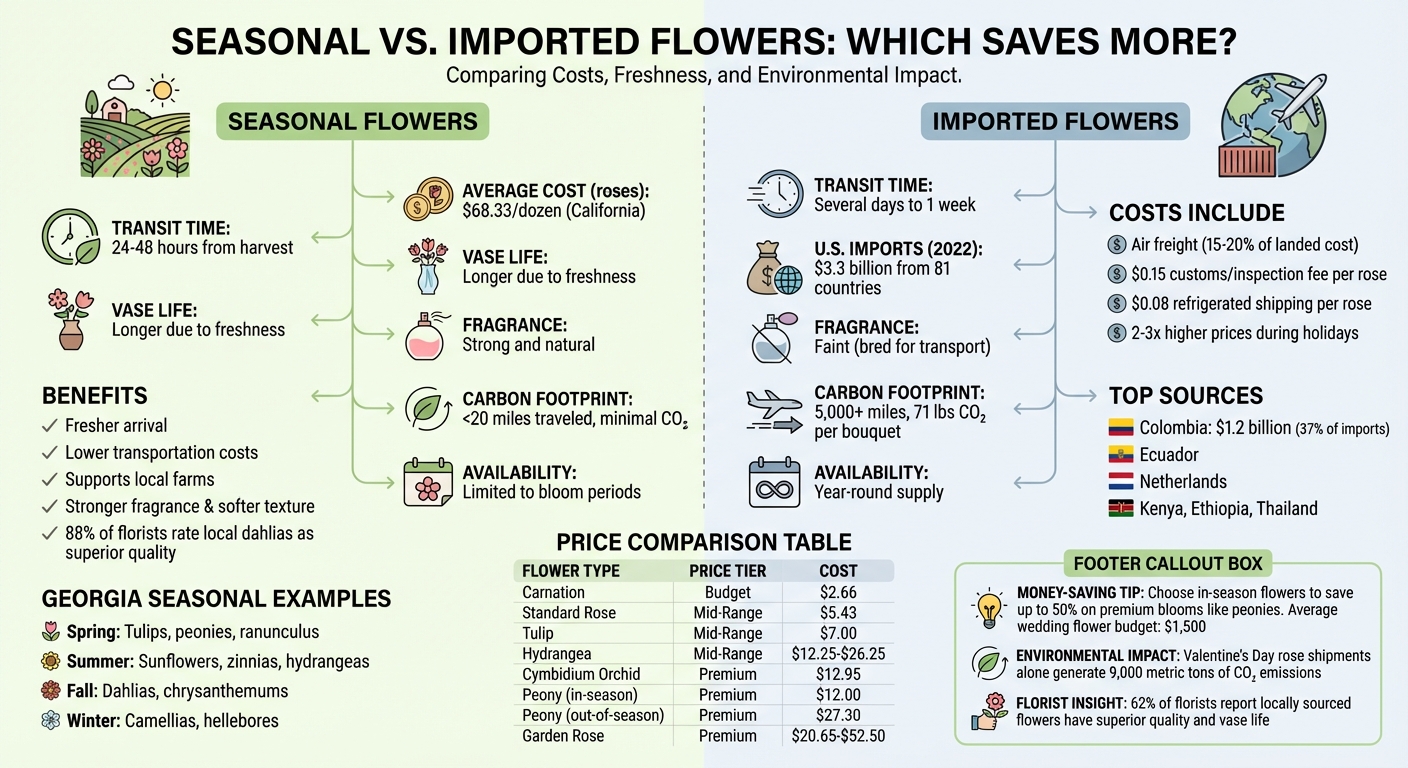
Seasonal vs Imported Flowers: Cost, Quality and Freshness Comparison
Where You Buy Your Flowers Matters More Than You Think
What Are Seasonal Flowers?
Seasonal flowers are blooms that are grown and harvested locally during their natural growing season in your area. Unlike imported flowers, which often endure long journeys, seasonal flowers are sourced nearby, typically reaching you within 24–48 hours. This quick turnaround eliminates the need for air freight, customs checks, and extended transit times, offering clear advantages in both cost and quality.
Because they follow a shorter supply chain with fewer intermediaries, seasonal flowers avoid the added expenses tied to international shipping, fuel surcharges, and import taxes. This streamlined process not only reduces costs but also preserves the flowers' freshness and quality. Additionally, when flowers like tulips in spring or sunflowers in summer bloom in abundance, their plentiful supply naturally drives prices down.
Locally grown flowers often have a stronger fragrance and softer textures compared to imported varieties. Imported flowers are typically bred to withstand long-distance travel, which can diminish their scent and delicate feel. For instance, locally grown dahlias and zinnias maintain their softness and fragrance, while imported versions may prioritize durability over these qualities. The shorter journey from farm to vase enhances both the affordability and the overall appeal of seasonal flowers.
Benefits of Seasonal Flowers
Choosing seasonal flowers offers several practical benefits. For one, the local sourcing model helps keep costs in check by reducing transportation and handling fees. During peak growing seasons, an abundant supply further minimizes shipping expenses, making seasonal blooms a budget-friendly option. In fact, a study found that nearly 50% of florists are willing to pay a slight premium - up to 5% over wholesale prices - for locally sourced flowers because of their superior quality.
Freshness is another major perk. Imported flowers are often shipped dry-packed (without water) and treated with chemicals to endure their lengthy transit. In contrast, locally grown flowers arrive fresher and without the need for such treatments. Plus, sourcing flowers locally has a smaller environmental footprint. For example, shipping 100 million roses for Valentine's Day generates around 9,000 metric tons of CO₂ emissions - an impact largely avoided with local sourcing.
Seasonal Flowers in Georgia by Season
Georgia's climate supports a diverse range of flowers throughout the year. Here's a seasonal breakdown of what you might find:
- Spring: Tulips, daffodils, peonies, ranunculus, anemones, and lilacs are plentiful and cost-effective.
- Summer: Sunflowers, zinnias, lilies, hydrangeas, and Queen Anne's lace bring vibrant colors to arrangements.
- Fall: Dahlias and chrysanthemums add rich, warm hues ideal for autumn celebrations.
- Winter: While options are more limited, camellias (peaking in late winter), hellebores, and amaryllis are available, though often at slightly higher prices due to reduced supply.
What Are Imported Flowers?
Unlike seasonal flowers, which benefit from shorter supply chains and lower costs, imported flowers take a more intricate journey to meet the U.S.’s year-round demand for blooms. A large portion of these flowers comes from Colombia and Ecuador, which dominate U.S. flower imports. Other prominent suppliers include the Netherlands, Kenya, Ethiopia, Canada, and Thailand. In 2022, the U.S. imported nearly $3.3 billion worth of cut flowers and nursery products from 81 countries.
Most of these flowers arrive in the U.S. through Miami, a key distribution hub. From there, they’re transported in refrigerated trucks to wholesalers and florists nationwide. The journey is anything but simple. As Amy Stewart describes in her book, Flower Confidential:
"Those flowers have passed through more hands, maybe travelled through more countries, might have been talked about in more languages, might have been haggled over in more currencies, and are better traveled than you on your last summer vacation."
This complex process adds to the cost. For example, roses flown from Bogotá to Miami incur a 15-cent importer fee for customs and inspection, plus 8 cents per rose for domestic refrigerated shipping. During high-demand periods like Valentine's Day, limited cargo space and faster shipping requirements can push prices 2–3 times higher than usual.
Despite the higher costs, imported flowers offer something local growers can’t always guarantee: availability throughout the year. Thanks to their location near the equator, countries like Colombia and Ecuador enjoy consistent sunlight and ideal temperatures, making it possible to grow flowers year-round without the need for expensive heating or cooling systems. This means you can find roses in January or peonies in November, even when they’re out of season in the U.S..
Why Choose Imported Flowers?
Imported flowers provide a dependable supply of popular blooms no matter the season. This is a big advantage for events like weddings or corporate gatherings, where specific flowers are often non-negotiable.
They also introduce exotic varieties that don’t thrive in the U.S., such as orchids from Thailand or proteas from South Africa. During off-seasons, flowers like peonies are sourced from the Southern Hemisphere, ensuring availability even in months like November.
Colombia alone exported around $1.2 billion worth of flowers to the U.S. in 2022, representing about 37% of the total import value. This scale allows florists to offer a wide range of options, from classic roses to unique specialty blooms, without waiting for local growing seasons.
However, these advantages come with some challenges.
Drawbacks of Imported Flowers
One of the main issues with imported flowers is transportation time. These blooms can spend up to a week traveling from the fields to florists, which often shortens their vase life compared to locally grown flowers that arrive much faster.
The higher price tag reflects more than just the flowers themselves. Costs include air freight, refrigeration, customs fees, and the risk of transporting perishable goods. Consumers ultimately pay more to cover these expenses, as well as to support growers who maintain year-round production.
There’s also the environmental impact to consider. Meeting U.S. demand during peak seasons requires 30 to 35 fully loaded planes flying daily from Bogotá to Miami. While imported flowers might use less energy than local blooms grown in heated greenhouses during winter, their air travel leaves a significant carbon footprint.
Next, we’ll look at how these factors influence the cost and quality of your floral arrangements.
Cost Comparison: Seasonal vs. Imported Flowers
Understanding the price difference between seasonal and imported flowers can help you make more informed budget decisions. This section breaks down costs by flower type and explores the factors that influence pricing.
Price Breakdown by Flower Type
The price of flowers varies greatly based on whether they're in season locally or imported. Here's a snapshot of what you might pay per stem:
| Flower Type | Price Tier | Estimated Retail (per stem) |
|---|---|---|
| Carnation | Budget | $2.66 |
| Standard Rose | Mid-Range | $5.43 |
| Tulip | Mid-Range | $7.00 |
| Hydrangea | Mid-Range | $12.25–$26.25 |
| Cymbidium Orchid | Premium | $12.95 |
| Peony | Premium | $27.30 |
| Garden Rose | Premium | $20.65–$52.50 |
Prices also depend on location and seasonality. For instance, a dozen locally grown roses in California costs an average of $68.33, while the same in Hawaii can run up to $143.32. Thanks to large-scale production in countries like Colombia and Ecuador, imported flowers such as roses and carnations remain relatively affordable year-round. However, sourcing out-of-season blooms, like peonies in November, often involves importing from the Southern Hemisphere, which significantly increases the price.
What Affects Flower Costs
Several key factors contribute to the final price tag of flowers at your local florist:
- Air Freight Costs: Shipping flowers internationally can account for 15–20% of their landed cost.
-
Holiday Demand: Prices can double or even triple during peak times like Valentine's Day or weddings, due to limited cargo space and the need for expedited shipping. Florist Robyn Hunter highlights the added burden of tariffs:
"If a set of wedding flowers contained roses sourced from Columbia, the florist would have to incur a 25% tariff on those flowers in addition to the base cost of the blooms".
- Rising Input Costs: Fertilizer prices have surged by 100–150% between 2021 and 2023, raising the cost of each stem by $0.02–$0.05. Wholesale prices have climbed 15–40% above pre-pandemic levels, with premium blooms like Ecuadorian roses seeing increases of 60–70%. Energy costs for Dutch growers, who produce year-round flowers like tulips and orchids, have also risen by over 20%.
- Labor Expenses: Labor accounts for about 40% of operating costs in U.S. greenhouses. During holidays, growers often pay higher wages to scale up production and meet demand.
These factors combine to create noticeable differences in pricing, especially between seasonal and imported flowers.
sbb-itb-2be19a4
Availability and Quality: Seasonal vs. Imported Flowers
Freshness and How Long Flowers Last
Local seasonal flowers typically arrive within 24–48 hours of being harvested, which helps preserve their moisture, scent, and overall quality. On the other hand, imported flowers may take several days to a week to reach their destination. They're often transported dry-packed and treated with preservatives, which can negatively affect their vase life.
Because local flowers avoid long-distance shipping and heavy refrigeration, they tend to last longer in vases and retain a fuller fragrance. Imported flowers, however, are often shipped without water and rely on chemical treatments to survive the journey. This process can strip them of nutrients and moisture, as highlighted by Erin Murphy from AZ Big Media:
"Imported flowers often lose moisture and nutrients along the way."
The breeding of imported flowers also impacts their quality. Trudi Donovan, owner of Bouquet of Granger, explains:
"Imported flowers are almost exclusively varieties that have been selectively bred FOR their vase life, although that has often come at the expense of their scent or texture. It's a direct genetic trade off."
Certain flower types, such as dahlias, peonies, and anemones, are particularly affected by the challenges of importation, often experiencing reduced longevity. In fact, a 2024 survey revealed that 88% of florists rated locally grown dahlias as superior in quality compared to imported ones.
These differences in freshness and vase life highlight how transportation and breeding choices shape the overall quality of flowers, setting the stage for discussions about cost and selection.
Seasonal Availability vs. Year-Round Supply
Imported flowers provide access to popular varieties throughout the year, while seasonal flowers, tied to their natural growing cycles, stand out for their superior freshness and fragrance. Many florists use a mix of both to balance variety with quality.
Local flowers are only available during their natural blooming periods - tulips in spring, dahlias in fall, and some varieties for as little as four weeks. By blending seasonal blooms with imported options, florists can offer the best of both worlds: the vibrant quality of local flowers and the consistent availability of imported ones when certain varieties are out of season.
| Feature | Seasonal/Local Flowers | Imported Flowers |
|---|---|---|
| Transit Time | 24–48 hours | Several days to 1 week |
| Vase Life | Longer due to freshness | Shorter; may arrive "stressed" |
| Fragrance | Strong and natural | Faint, often bred for transport |
| Availability | Limited to bloom periods | Year-round supply |
This combination of seasonal freshness and year-round availability creates a practical approach to sourcing flowers, which ties directly into budget considerations.
How to Save Money on Flowers
Choose In-Season Flowers
Seasonal blooms are usually more affordable because they're naturally abundant during their peak growing period. When supply is high, prices tend to drop. For instance, peonies cost around $12 per stem during their peak season (May–June) but can climb to $25 when out of season.
If you're planning a summer or fall event, Georgia-grown sunflowers and zinnias are fantastic options. They’re vibrant, budget-friendly, and perfect for those seasons. Considering couples spend an average of $1,500 on wedding flowers, sticking to in-season choices can make a noticeable difference. Wedding expert Jessica Bishop emphasizes:
"If you pick an out-of-season bloom, you could end up overpaying or going over budget".
Another tip? Avoid holidays like Valentine's Day or Mother's Day when demand spikes. Popular flowers such as roses can cost two to three times their usual price during these times.
Work with a Local Florist
Partnering with a local florist can save you money while ensuring fresher arrangements. Local florists often source seasonal blooms directly, avoiding the high costs of imported flowers. Imported flowers require air freight, refrigeration, and multiple distribution steps, all of which add up. Locally sourced blooms, on the other hand, can often be delivered within hours of being cut.
For example, Marietta Floral Design offers arrangements starting at $55.00, featuring fresh, locally sourced flowers hand-delivered across Marietta and Metro Atlanta. Be upfront about your budget - it helps your florist create designs that work within your price range. As experienced florists suggest:
"Communicate your budget upfront; an experienced floral designer can help you make thoughtful design decisions within your budget".
To stretch your budget further, ask your florist about blooms currently in season and consider reusing ceremony flowers for your reception decor.
Stay Flexible with Flower Choices
Flexibility is key to keeping costs low. Share your color palette and overall aesthetic with your florist, but let them select the freshest and most affordable blooms to achieve your desired look. Sarah von Pollaro from Urban Petals Floral Design advises:
"Show photos for inspiration and share your color palette. Flexibility lets florists choose fresh, cost-effective alternatives, such as using carnations to mimic dahlias".
Affordable substitutions can deliver the same visual impact without breaking the bank. For example, hydrangeas can take the place of peonies for a lush, romantic vibe, and massed carnations can replicate the texture of dahlias. To add volume without increasing your flower count, consider greenery, fruiting branches, or even non-floral elements like vintage books or lanterns.
Focus your floral budget on standout pieces, such as the bridal bouquet or reception centerpieces, which are more likely to be photographed. For ceremony decor, simpler arrangements can still look elegant while helping you stay within budget. These practical strategies allow you to create stunning floral designs without overspending.
Conclusion
Seasonal flowers have a clear advantage over imports when it comes to cost, quality, and freshness. By skipping costly air freight, refrigeration, and customs fees, local blooms arrive faster, preserving their freshness and extending their vase life. This means longer-lasting arrangements with richer fragrances.
Despite the fact that about 80% of flowers sold in the U.S. are imported, a compelling 62% of florists say locally sourced flowers stand out for their quality and vase life. Opting for seasonal blooms not only brings better flowers into your home but also supports local farmers and businesses. As florist Trudi Donovan puts it:
"When our flower shop purchases locally grown flowers, that money goes DIRECTLY to the farmer growing them. It directly into our community".
Partnering with a local florist simplifies this decision. Marietta Floral Design, for instance, sources fresh, locally grown flowers and offers hand-delivered arrangements starting at $55.00 across Marietta and Metro Atlanta. Their team of skilled florists can guide you to the best blooms currently in season in Georgia.
The benefits go beyond cost and quality - choosing local flowers also helps the environment. Imported flowers can travel over 5,000 miles, generating 71 pounds of carbon dioxide equivalent per bouquet. In contrast, locally sourced flowers often travel less than 20 miles, drastically reducing their environmental footprint. By choosing seasonal, local arrangements, you’re not just making a smart financial and aesthetic choice - you’re contributing to your community and the planet.
FAQs
How can I tell if flowers are truly in season in Georgia?
To find out if flowers are in season in Georgia, consult local resources that provide details about when specific flowers are grown and available. Typically, flowers grown in Georgia are in season from early February through late November, with their peak availability falling between March and October. Choosing seasonal flowers often means they’re fresher and more budget-friendly compared to imported options.
Which imported flowers are worth buying off-season?
Imported flowers that thrive in regions with favorable year-round climates, like carnations, can be a smart choice even during off-season periods. These blooms are often easier on the wallet because they’re hardy and widely cultivated. However, it’s worth thinking about the environmental toll and increased transportation costs that come with off-peak imports. Still, when local seasonal flowers aren’t available, these imports can offer an affordable alternative.
How can I make a bouquet last longer at home?
To keep your bouquet looking fresh for longer, start by recutting the stems at an angle. Remove any leaves that would sit below the waterline to prevent bacteria growth. Use a clean vase filled with fresh water, and change the water daily. Place your flowers in a cool spot, away from direct sunlight, heat sources, and fruit, as these can speed up wilting. Adding a flower preservative and trimming the stems every few days can further extend their life. Don’t forget to remove any wilted blooms to keep the arrangement looking its best.