


When working with a limited floral budget, focusing on high-impact areas and smart planning can make all the difference. Here’s a quick summary:
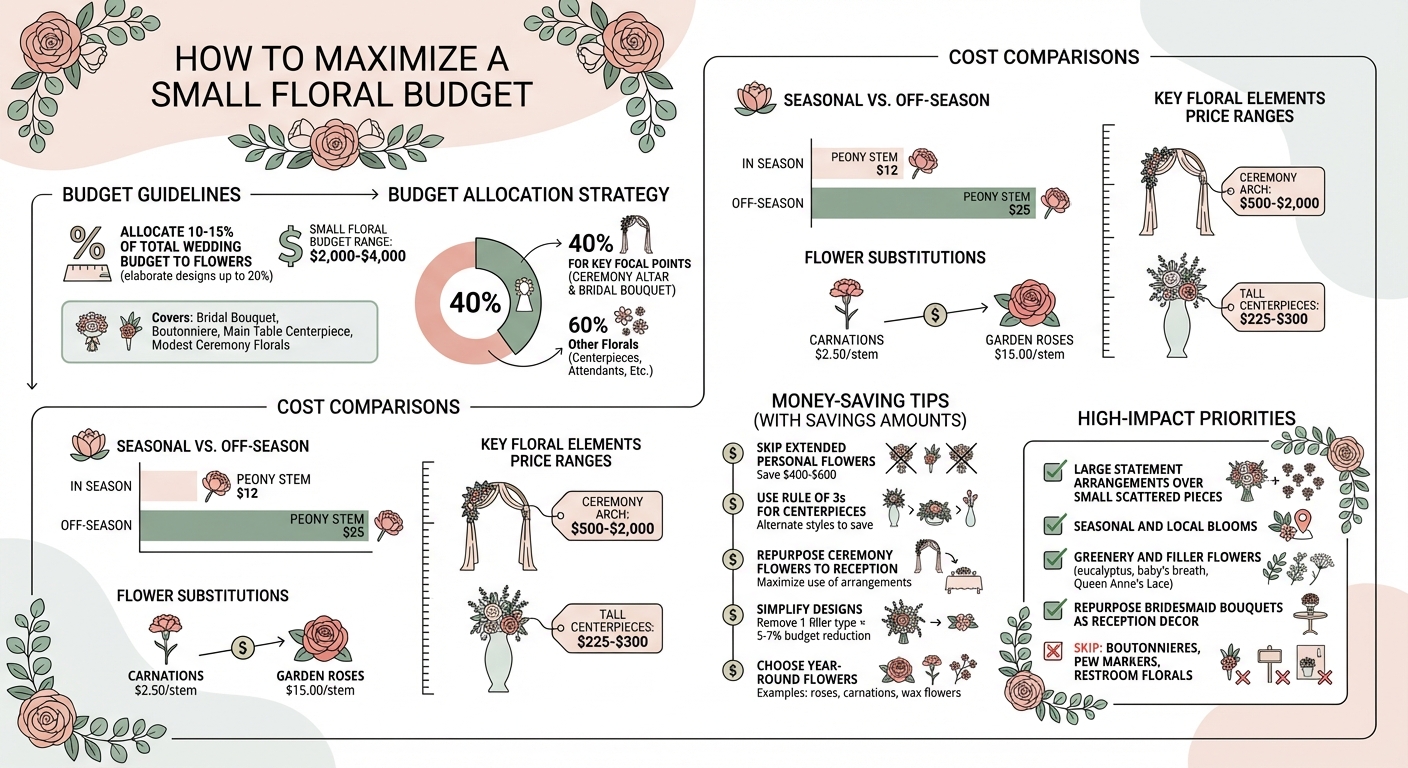
- Allocate Wisely: Spend 10-15% of your wedding budget on flowers. For a "small" budget ($2,000–$4,000), prioritize essentials like the bridal bouquet and ceremony decor.
- Prioritize Impact: Invest in standout pieces like ceremony arches or centerpiece arrangements instead of scattering small decorations.
- Use Seasonal, Local Blooms: Opt for flowers in season to save on costs while ensuring quality.
- Repurpose Arrangements: Reuse ceremony flowers at the reception to get the most out of your budget.
- Collaborate with Your Florist: Share your budget upfront to receive tailored recommendations and cost-saving substitutions.
Small Floral Budget Breakdown and Cost-Saving Strategies
💐 How Much Do Wedding Flowers Cost? | Wedding Budget Breakdown
Planning Your Floral Budget
Set a realistic floral budget based on your overall event finances. Experts suggest allocating 10% to 15% of your total wedding budget for flowers, though elaborate designs might push this closer to 20%. This range helps you balance your floral vision with financial practicality.
For perspective, a "small" floral budget is typically between $2,000 and $4,000. This amount usually covers essentials like a bridal bouquet, boutonniere, a main table centerpiece, and modest ceremony florals, such as a small arch or pedestal arrangements. If your budget falls below this range, you'll need to carefully prioritize the most meaningful elements.
List All Required Floral Items
Start by making a list of every floral element you’d like for your event. This could include:
- Bridal bouquet, bridesmaid bouquets, and boutonnieres
- Ceremony decor, such as altar arrangements or aisle markers
- Reception centerpieces and cocktail hour arrangements
- Extras like flowers for the cake table or restroom decor
Once you’ve outlined your list, divide it into "must-haves" (e.g., the bridal bouquet or ceremony focal point) and "nice-to-haves" (like extra arrangements for family or decorative touches). This approach helps you allocate funds wisely, ensuring key areas are covered without overspending on less essential details. For example, skipping additional personal flowers could save you $400 to $600. After finalizing your list, share it with your florist to align your priorities with your budget.
Share Your Budget with Your Florist
Be upfront about your budget from the start. This transparency allows your florist to recommend designs and flowers that fit your financial plan, avoiding unexpected costs later.
As floral designer Marta Sandri points out, floral arrangement costs go beyond the blooms themselves - they also include design, sourcing, labor, logistics, and installation. By sharing your budget, your florist can allocate funds strategically. For instance, they might use carnations (around $2.50 per stem) as fillers in larger pieces while reserving pricier garden roses (about $15.00 per stem) for standout items like the bridal bouquet. This thoughtful allocation ensures maximum impact for every dollar spent.
If you’re in the Marietta area, consider reaching out to Marietta Floral Design (https://mariettafloraldesign.com). Their team specializes in creating stunning arrangements tailored to your vision and budget. With these strategies, you can focus on high-impact floral pieces that bring your event to life without overspending.
Focus on High-Impact Arrangements
When working with a limited floral budget, it’s better to concentrate on a few bold, eye-catching pieces rather than scattering smaller ones throughout the venue. This approach not only creates a stronger visual impact but also ensures your budget is used effectively. Let’s explore how to make the most of your arrangements.
Choose Large Statement Arrangements
Prioritize one or two standout pieces that command attention. Think about a dramatic ceremony arch, grand freestanding altar urns, or elevated centerpieces - these can transform the entire look of your event. As Gerry Rogers, Founder and Lead Designer at Petal's Edge Floral Design, puts it:
"A few intentional floral arrangements will go much further in terms of impact than trying to cover everything."
Experts suggest allocating around 40% of your floral budget to key focal points like the ceremony altar and bridal bouquet, as these moments are often the most photographed. For reference, a ceremony arch generally costs between $500 and $2,000, while tall centerpieces typically fall in the $225 to $300 range. The key is ensuring these arrangements are sized appropriately for their setting; pieces that are too small can feel out of place and diminish the overall aesthetic. Focusing your budget this way ensures every dollar contributes to a more striking and memorable event.
Reduce or Skip Small Details
Eliminate low-visibility floral elements to free up funds for your larger, more impactful arrangements. Items like boutonnieres, corsages for extended family, pew markers, and restroom or guestbook table arrangements often go unnoticed. Skipping these "extended" personal flowers can save anywhere from $400 to $600.
For reception tables, apply the "Rule of 3s": not every table needs a full floral centerpiece. Alternate between different styles, such as candle and greenery arrangements, grouped bud vases, or traditional centerpieces. This variation adds visual interest while keeping costs manageable. Another smart tip? Repurpose bridesmaid bouquets as reception decor. Simply place them in vases on bars, cake tables, or gift tables after the ceremony. These thoughtful adjustments allow you to maintain an elegant design without overspending. Up next, discover how to repurpose your floral arrangements to stretch your budget even further.
Choose Seasonal and Local Flowers
Opting for locally grown, seasonal flowers is a smart way to make the most of your floral budget. These flowers are more affordable because they skip the hefty shipping and off-season growing costs. Floral and event designer Maxine Owens highlights this benefit:
"The freshness and quality of the flowers are at their height, so blooms will be larger, more robust, and will last longer."
For instance, a peony stem might cost around $12 during its peak season but could jump to $25 when it's out of season. Beyond saving money, seasonal flowers also bring a naturally fresh and striking look to your arrangements.
Select Flowers in Season
To stretch your budget further, focus on flowers that are in season. In Georgia, seasonal blooms not only offer great value but also add a touch of local charm. In the spring, tulips and ranunculus bring elegance, while summer offers hydrangeas for fullness, paired with cheerful sunflowers and zinnias. Fall weddings can feature rich, jewel-toned chrysanthemums and dahlias, while winter events shine with classic anemones and amaryllis.
Some flowers, like roses, carnations, and wax flowers, are available year-round, making them a budget-friendly choice. Wax flowers, in particular, work wonderfully as fillers, adding texture without breaking the bank. Local florists, such as Marietta Floral Design, often prioritize sourcing flowers from nearby growers, ensuring fresh, high-quality blooms while supporting local agriculture. Pair your seasonal selections with affordable greenery to create a complete and polished look.
Add Greenery and Filler Flowers
Greenery is an affordable way to elevate your floral arrangements. Eucalyptus, myrtle, and ferns are excellent choices for adding texture and volume without increasing costs significantly. Filler flowers like baby's breath, wax flowers, and Queen Anne's Lace also bring a delicate touch to your designs, softening the overall look. By incorporating these elements, you can achieve elegant arrangements while reserving more of your budget for standout statement blooms.
sbb-itb-2be19a4
Repurpose and Simplify Designs
Make the most of your floral budget by repurposing ceremony flowers. Considering that most ceremonies last just 30 minutes or less, giving those arrangements a second life at the reception ensures they get plenty of attention. With some careful planning, you can create a seamless transition from ceremony to reception without doubling up on floral expenses.
Move Ceremony Flowers to the Reception
Ask your florist to use standalone containers for ceremony arrangements, making it easier to move them to the reception. Large floral pieces from the ceremony can be repositioned to highlight key areas like the reception entrance, buffet table, or the space behind the sweetheart table. Even your bridal bouquet can pull double duty as a centerpiece for the sweetheart table. Just make sure vases with fresh water are ready at the reception to keep flowers looking vibrant. For those using a ceremony arch or backdrop, think about relocating it to serve as a striking backdrop for the sweetheart table or as a photo booth feature.
Melanie Levin, Owner of LuckEleven Events, shares this tip:
The best way to cut down your floral budget is to repurpose flowers from your ceremony to your reception.
To ensure everything goes smoothly, assign someone to handle the floral transition during cocktail hour. This simple step guarantees your flowers are beautifully repurposed and ready to shine at the reception. These thoughtful touches not only save money but also create an elegant and cohesive look.
Opt for Simpler Designs
Simplify your floral décor further by embracing minimalist designs. These arrangements are not only stylish but also require fewer materials and less labor. For example, monobloom bouquets - using just one flower variety, like roses - offer a sleek, modern aesthetic that’s easier for florists to prepare. Sticking to a single color palette can also streamline the design process and help trim costs.
Instead of placing large, elaborate centerpieces on every table, try grouping small bud vases with candles for a romantic and artistic vibe that uses far fewer flowers. Opting for round tables can also save money since they only need one central arrangement, unlike long banquet tables that require more extensive décor. Even small adjustments, like removing one type of filler flower or greenery from a bouquet, can reduce your floral budget by 5–7%.
Work Closely with Your Florist
When you're working with a tight budget, your florist becomes your best ally. Professional florists dedicate countless hours to weddings, managing everything from consultations and designs to sourcing and setup tasks. Their expertise is especially helpful when you're trying to stretch every dollar. A florist like Marietta Floral Design can help you navigate seasonal flower options, suggest cost-effective substitutions, and pinpoint areas where you can save without compromising your vision. This collaboration is key to creating a beautiful event while staying within your financial limits.
Discuss Budget Limits and Priorities
Once you've outlined your budget, having an open conversation with your florist can refine your priorities and help create stunning floral arrangements. As Fiore Designs wisely notes:
A clear budget is not a buzzkill. It helps you and your florist make smart choices early, before you get attached to ideas that do not fit the numbers.
Start by sharing a list of your "must-haves" and "nice-to-haves." For example, if your bridal bouquet and dinner table centerpieces are top priorities but you're less concerned about cocktail hour arrangements, make that clear. This level of transparency allows your florist to focus resources where they matter most.
Instead of requesting specific, high-cost flowers, describe your desired aesthetic - think about your color palette, overall vibe, or style preferences. This approach gives your florist the freedom to find the best blooms within your budget. As Vincenzo Butera of Butera The Florist explains:
Your professional florist can guide you to the choices that best serve you and steer you away from unnecessary expenses.
Consider Flower Substitutions
Being flexible with your flower choices is another way to keep costs down while maintaining visual appeal. Trust your florist to recommend substitutions that look fantastic but cost less. For instance, carnations, priced around $2.50 per stem, can replace garden roses, which cost about $15.00 per stem, in large installations. Meanwhile, premium flowers can still shine in key areas like your bridal bouquet.
Ask about "complementary blooms" that mimic the appearance of pricier flowers. For example, ranunculus or double tulips provide a lush, multi-petaled look similar to peonies but at a lower price point. You might also consider flowers with large heads, such as hydrangeas or sunflowers, which fill space beautifully with fewer stems. By giving your florist creative freedom and staying open to substitutions, you can achieve a stunning floral design without overspending.
Conclusion
Creating stunning floral arrangements on a budget is absolutely possible with a little planning and creativity. Focus on seasonal and local flowers, which tend to be more affordable, and use greenery to add fullness and texture without adding to the cost. Another smart move? Reuse ceremony arrangements at your reception to get more mileage out of your designs. Keeping arrangements simple can also help reduce labor costs.
Partnering with an experienced florist, like Marietta Floral Design, can make a huge difference. Professionals bring not only a keen eye for design but also practical solutions, helping you choose substitutions and focus your budget where it will have the biggest visual impact.
Be upfront about your budget so your florist can craft thoughtful, cost-effective solutions. With strategic planning and teamwork, you can turn budget limitations into a beautiful reality.
Make every flower count, and let your event bloom with style - no matter the budget.
FAQs
What should I book first with a small floral budget?
Start by reserving the must-have floral items like the bridal bouquet, bridesmaid bouquets, and boutonnieres. These are the basics that most weddings can't go without and will cover your primary floral needs. Once these are taken care of, you can explore adding extras like centerpieces or other decorative arrangements if your budget permits.
How can I repurpose ceremony flowers at the reception?
Repurpose your ceremony flowers to get the most out of your floral arrangements. The bride's and bridesmaids' bouquets can double as stunning centerpieces or decorations for the head table. Similarly, flowers from the aisle or arch can be relocated to reception tables, the cake table, or even lounge areas. Work with your florist or planner to ensure everything is carefully transferred and beautifully arranged, allowing you to save on costs while still creating a gorgeous setup.
Which flower swaps save the most without changing the look?
To keep costs in check without compromising on style, consider swapping pricey flowers like peonies, ranunculus, and anemones for more affordable options like carnations and spray roses. These budget-friendly blooms mimic the shapes and colors of their expensive counterparts. Reserve the pricier flowers for focal arrangements, such as the bridal bouquet, and combine them with filler flowers to stretch your budget while still achieving a stunning look.