


Vintage wedding flowers create a romantic, timeless feel by combining muted tones, classic blooms, and natural arrangements. Here's a quick guide to get started:
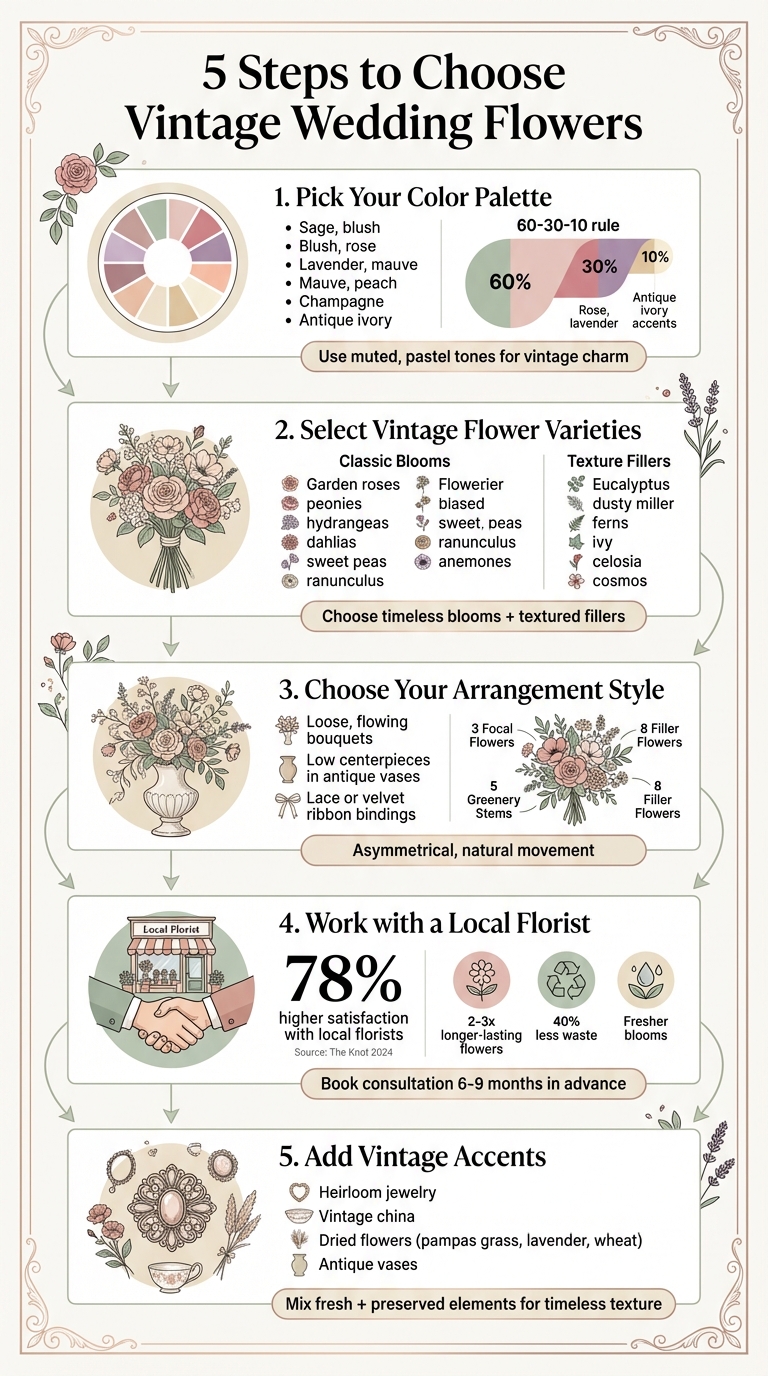
- Pick a Color Palette: Use soft, muted shades like blush, sage, lavender, or champagne. Stick to the 60-30-10 rule for balance.
- Choose Timeless Flowers: Go for roses, peonies, hydrangeas, or dahlias. Add texture with eucalyptus, dusty miller, or wildflowers.
- Style Your Arrangements: Opt for loose, flowing bouquets and low centerpieces in antique vases for an elegant look.
- Work with a Local Florist: Ensure fresh, seasonal flowers and personalized designs by collaborating with florists in your area.
- Add Finishing Touches: Use lace, velvet ribbons, or heirloom accessories. Include dried elements like pampas grass for extra texture.
These steps will help you create stunning vintage-inspired floral arrangements that perfectly suit your wedding style.
5 Steps to Choose Vintage Wedding Flowers
How to Create a Vintage-inspired Bridal Bouquet
sbb-itb-2be19a4
Step 1: Pick Your Color Palette
Your color palette lays the groundwork for your vintage floral design. The right mix of muted tones creates that unmistakable vintage vibe. It’s all about setting the mood for the blooms and arrangements you’ll select later.
Muted and Pastel Colors
Start by focusing on muted hues that bring a sense of nostalgia and romance. Vintage-inspired color palettes often include shades like sage, blush, rose, lavender, blue, mauve, peach, champagne, and antique ivory. These soft tones naturally carry a sense of history, making them ideal for this aesthetic.
"Vintage hues have an enduring charm - think the soft sage of heirloom stationery, the rosy blush reminiscent of your grandmother's lipstick, or the deep velvety navy that graced velvet ring boxes a century ago."
– Caroline, Author at Cardhunter Paperie
To add dimension, layer these classic shades with neutrals like taupe or mocha. Choose an anchor color, such as Art Nouveau green or sepia, and pair it with complementary neutrals and a bold accent - deep raspberry, for instance, can add just the right pop of color.
Coordinate Colors with Wedding Details
Once your palette is set, weave these colors into your overall wedding décor. Your floral arrangements should complement your venue, attire, and other decorative elements. Bring fabric swatches, like those from bridesmaid dresses or table linens, when meeting with your florist to ensure everything ties together.
A great rule to follow is the 60-30-10 principle for color distribution. Use your primary color for 60% of the wedding elements (like attire and large décor pieces), a secondary color for 30% (bouquets and centerpieces), and an accent color for the remaining 10% (ribbons, candles, or stationery). Pay attention to undertones - cool lavender flowers, for example, pair beautifully with silver accents and gray dresses, while warm peach and cream blooms shine alongside antique gold or brass containers. Always test your swatches in your venue’s lighting, as artificial light or wood paneling can dramatically change how colors appear.
Step 2: Select Vintage Flower Varieties
Once you've settled on your color palette, it's time to pick flower varieties that exude vintage charm. The right blooms will naturally evoke a sense of nostalgia while blending beautifully with the soft, muted tones you've chosen.
Classic Vintage Blooms
Some flowers are practically synonymous with vintage elegance. Garden roses, peonies, and hydrangeas are timeless choices, thanks to their lush, full petals and delicate shades like blush and ivory. These blooms often serve as the foundation for vintage wedding designs. To add a romantic, freshly-picked feel, consider including sweet peas, ranunculus, hellebores, and anemones.
For late-summer or autumn weddings, dahlias are a standout option. The Cafe au Lait dahlia, in particular, is highly sought after for its soft blush tones, making it a favorite for vintage-style bouquets. Keep in mind the blooming seasons - ranunculus and peonies, for instance, are at their best in spring and early summer.
Once you've chosen your main flowers, it's time to enhance your arrangements with fillers that add texture and depth.
Add Texture with Filler Flowers
Filler flowers and foliage are essential for creating a layered, dynamic look. Eucalyptus, ferns, and ivy provide a lush and natural base, while dusty miller offers a soft gray hue that pairs beautifully with lavender or gray-themed palettes. For a more structured and textured arrangement, branches like oak or copper beech are excellent choices, especially for fall weddings.
If you're aiming for a whimsical, wildflower-inspired vibe, fillers like celosia, gomphrena, cosmos, and zinnias can create that hand-gathered, natural aesthetic. For deeper vintage tones such as navy or burgundy, balance the richness with neutral fillers in cream or gray to keep the arrangement refined. On the other hand, bright spring green foliage can add a fresh, lively contrast to bouquets with darker, richer hues.
Step 3: Choose Your Arrangement Style
How you arrange vintage flowers can make or break the overall look. The key is to focus on natural movement and depth while steering clear of rigid, overly symmetrical designs.
Loose, Flowing Bouquets
Loose bouquets with flowing greenery embody vintage charm by mimicking nature's freeform beauty. Instead of tightly packed arrangements, aim for an asymmetrical style with varied heights and placements. A helpful guide is the 3-5-8 rule - use 3 focal flowers, 5 greenery stems, and 8 filler flowers. This approach, inspired by the Fibonacci sequence, creates a balanced yet natural feel.
"The 3-5-8 rule isn't about following a formula rigidly. It's about understanding the visual principles that make any bouquet look professionally designed and naturally beautiful." - Sola Wood Flowers
When arranging, place focal flowers in a loose triangular pattern for visual interest. Group fillers in odd numbers - try 3 sprigs of baby's breath here, 2 stems of waxflower there - to give your bouquet that fresh-from-the-garden vibe. Let greenery flow organically, with some stems nestled among the blooms and others extending outward. For larger bouquets, scale up the ratio to 5-8-13 or even 8-13-21 to maintain harmony while keeping that effortless, flowing look.
Once your bouquet is set, it’s time to think about how antique-inspired containers can elevate your arrangements.
Low Centerpieces in Antique Vases
The container you choose plays a huge role in reinforcing the vintage theme. Think Victorian silver-plated tea sets, ornate compotes, or pressed glass vases for a touch of elegance. For something more personal, consider repurposing antique teacups or vintage glassware - these add nostalgic charm and can even incorporate meaningful family heirlooms.
Keep centerpieces low to encourage conversation at the table. Fill your antique vessels with loose, asymmetrical arrangements similar to your bouquets. Let the flowers spill naturally over the edges rather than forming a structured dome. This pairing of vintage containers with free-flowing florals creates a romantic, old-world atmosphere.
Finish with Period-Appropriate Bindings
To tie everything together, use bindings that echo the elegance of the past. Wrap bouquet stems in lace, velvet ribbons, or crochet trims to enhance the nostalgic feel. For spring and summer weddings, soft chiffon ribbons in muted tones are ideal. For fall, opt for deep, jewel-toned velvet for a richer look.
Crochet trims can add a delicate touch, while heirloom lace introduces a dramatic, theatrical flair. These small but thoughtful details transform your arrangements into cohesive vintage statements, perfectly complementing your flowers, colors, and overall wedding aesthetic.
Step 4: Work with a Local Florist
Once your floral arrangements are planned, the next step is finding a skilled local florist to bring your vision to life. Local professionals have a deep understanding of vintage styles and can craft arrangements that align perfectly with your historic theme.
Why Choose Local Florists
Opting for a local florist guarantees fresher blooms. Without the risks of long-distance shipping, flowers arrive in peak condition. According to The Knot 2024 Wedding Report, 78% of couples report higher satisfaction with local florists for weddings due to their personalized service and the superior freshness of their flowers. This freshness is especially important for vintage favorites like garden roses or ranunculus, which can last 2-3 times longer than imported flowers.
Local florists also excel in customization. They can adapt arrangements to reflect your unique style - whether it's muted pastel tones or vintage-inspired designs with dahlias and baby's breath. Plus, they work with the local bloom seasons. For example, in Georgia, experienced florists know how to navigate the challenges of high heat and humidity, often recommending heat-resistant flowers that hold up beautifully during outdoor ceremonies.
Another perk? Supporting local florists means supporting your community. These businesses contribute to the local economy by employing nearby staff and sourcing flowers from regional growers. A 2023 Floral Industry Sustainability Study even found that local sourcing reduces flower waste by 40%. This makes choosing local not only a thoughtful decision but also a more sustainable one.
For couples planning a vintage wedding in Georgia, one standout choice deserves special mention.
Marietta Floral Design Services
Marietta Floral Design, based in Marietta, GA, specializes in artisan bridal bouquets and event installations that perfectly capture vintage elegance. By sourcing and hand-delivering local flowers, they ensure unmatched freshness. Their expertise in vintage aesthetics allows them to create everything from loose, flowing bouquets to low centerpieces displayed in antique vases - always tailored to your vision.
With a 4.9/5 rating on Google from over 250 reviews, customers rave about their "stunning vintage bouquets that lasted the entire wedding weekend" and "exceptional customization". Serving Marietta and the greater Metro Atlanta area, they even offer same-day delivery, which is a lifesaver for last-minute adjustments to ensure your flowers are at their freshest for your big day. To secure their services, schedule a consultation 6-9 months in advance. During your meeting, you can explore their portfolio of pastel palettes, discuss period-inspired designs, and confirm the availability of seasonal blooms for your wedding.
Step 5: Add Vintage Accents
Now that your arrangements exude vintage charm, it's time to add those final touches that truly complete the look.
Antique Accessories
In addition to the period-appropriate bindings mentioned earlier, consider incorporating heirloom jewelry and brooches to enhance your vintage floral designs. For instance, you could pin a cherished brooch from your grandmother onto your bouquet wrap or weave family lace into your centerpiece designs as a heartfelt nod to family history. At the reception, pairing floral arrangements with vintage china or specialized tableware brings a classic "something old" element to your decor.
Accessories featuring vine motifs, like "Vintage Vine" or "Wildflower Vine" designs, are another thoughtful addition. These pieces echo the natural beauty of your flowers while reinforcing a romantic, garden-inspired theme. Such accents blend effortlessly with vintage floral arrangements.
Dried and Preserved Elements
Combining fresh blooms with dried and preserved flowers can add incredible depth and texture to your arrangements, creating a look that feels timeless. Amanda Lang from Garden Vivien highlights this approach:
The combination of preserved and fresh florals in a soft, muted palette lets the array of textures be an absolute feast for the eyes.
For centerpieces, try pairing elegant fresh roses with dried elements like palm fronds or soft cotton globes to add structure and visual intrigue. You can also mix pampas grass, lavender, or wheat with fresh flowers for a textured, lasting effect. For boutonnieres, consider pairing delicate dried lavender with bleached wheat for a rustic, meadow-inspired feel. Dried scabiosa or King Protea can serve as striking focal points alongside airy bleached grasses.
Dried elements not only elevate the texture of your arrangements but also emphasize the timeless appeal of vintage design. Plus, they’re practical - they last indefinitely and can become cherished keepsakes from your wedding. Display these preserved arrangements in antique brass-footed vases or mercury glass votives to amplify the vintage ambiance.
Conclusion
Creating vintage wedding flower arrangements comes down to five key steps that help you achieve a timeless, cohesive look. First, focus on a muted color palette - think blush, sage, lavender, or champagne. Then, select classic blooms like roses, peonies, and hydrangeas, pairing them with textured greenery to add depth and a romantic, organic feel.
The arrangement style ties everything together. Opt for loose, flowing designs displayed in antique vessels to embody the vintage vibe, and finish with bindings that echo the charm of the era.
Once you've chosen your colors, flowers, and arrangement style, working with an expert can help bring your vision to life. As Paulina Bronstein explains:
The new wave of vintage florals pulls from the romance of bygone eras yet styles it with clarity, restraint, and a distinctly modern point of view.
Marietta Floral Design provides personalized consultations to make sure your arrangements blend timeless elegance with your own style. This collaboration ensures every detail is thoughtfully crafted.
Finally, vintage accents - like antique accessories or dried elements - add the perfect finishing touch. By following these steps and teaming up with skilled professionals, you’ll design florals that honor the past while feeling fresh and uniquely yours for your special day.
FAQs
How do I make vintage flowers look cohesive with my venue?
To achieve a timeless, vintage-inspired look, opt for flowers and arrangements in soft ivory shades, muted pastels, and textures that evoke lace. Pair these with antique-style centerpieces or bouquets wrapped in lace to seamlessly match the venue's decor. For well-balanced arrangements, try the 3-5-8 rule: combine focal flowers, greenery, and fillers in a way that creates a harmonious and elegant display.
What are the best vintage blooms for each wedding season?
The best vintage flowers carry a timeless charm, and the perfect choice often depends on the season.
- Spring brings the delicate beauty of peonies, ranunculus, and sweet peas, creating a soft and romantic atmosphere.
- Summer bursts with vibrant roses, dahlias, and sunflowers, radiating warmth and bold color.
- Fall embraces the richness of chrysanthemums, dahlias, and marigolds, showcasing deep, earthy tones.
- Winter highlights the nostalgic elegance of amaryllis, holly, and anemones, perfect for festive arrangements.
Choosing seasonal blooms not only ensures freshness but also adds an authentic touch to your floral designs.
How can I keep vintage bouquets from wilting on the wedding day?
To keep vintage bouquets looking their best, place them in a cool, shaded spot away from direct sunlight. Keep them hydrated by storing them in water until right before the ceremony or by using a floral foam oasis. After the event, you can preserve their shape and color by hanging them upside down to dry. Proper care right away is key to ensuring they stay fresh throughout the day.