


Wedding flowers can cost anywhere from $5,100 to $7,600, with an average of $6,300 - typically 10–15% of your wedding budget. For more intricate designs, this can rise to 20–25% or more. Key cost drivers include flower type, seasonality, venue size, and labor for design, delivery, and setup. Here's how to plan:
- Set your floral budget: Allocate 10–15% of your total wedding budget (e.g., $3,000–$4,500 for a $30,000 wedding).
- Prioritize essentials: Focus on bouquets, ceremony backdrops, and centerpieces.
- Choose seasonal/local flowers: Save costs while ensuring freshness.
- Repurpose arrangements: Use ceremony flowers for reception décor to cut costs.
- Account for labor fees: Delivery, setup, and breakdown typically add 25–30% to floral expenses.
Personal flowers like bridal bouquets range from $195 to $350, bridesmaid bouquets from $65 to $150, and boutonnieres from $15 to $40. Ceremony flowers, including altar décor, can cost $2,000–$15,000, depending on complexity. Reception flowers often take 30–40% of your floral budget, with centerpieces and head table arrangements being key.
Start planning early, communicate your budget clearly with your florist, and focus on areas with the most visual impact. By balancing premium blooms with fillers, you can create stunning arrangements without overspending.
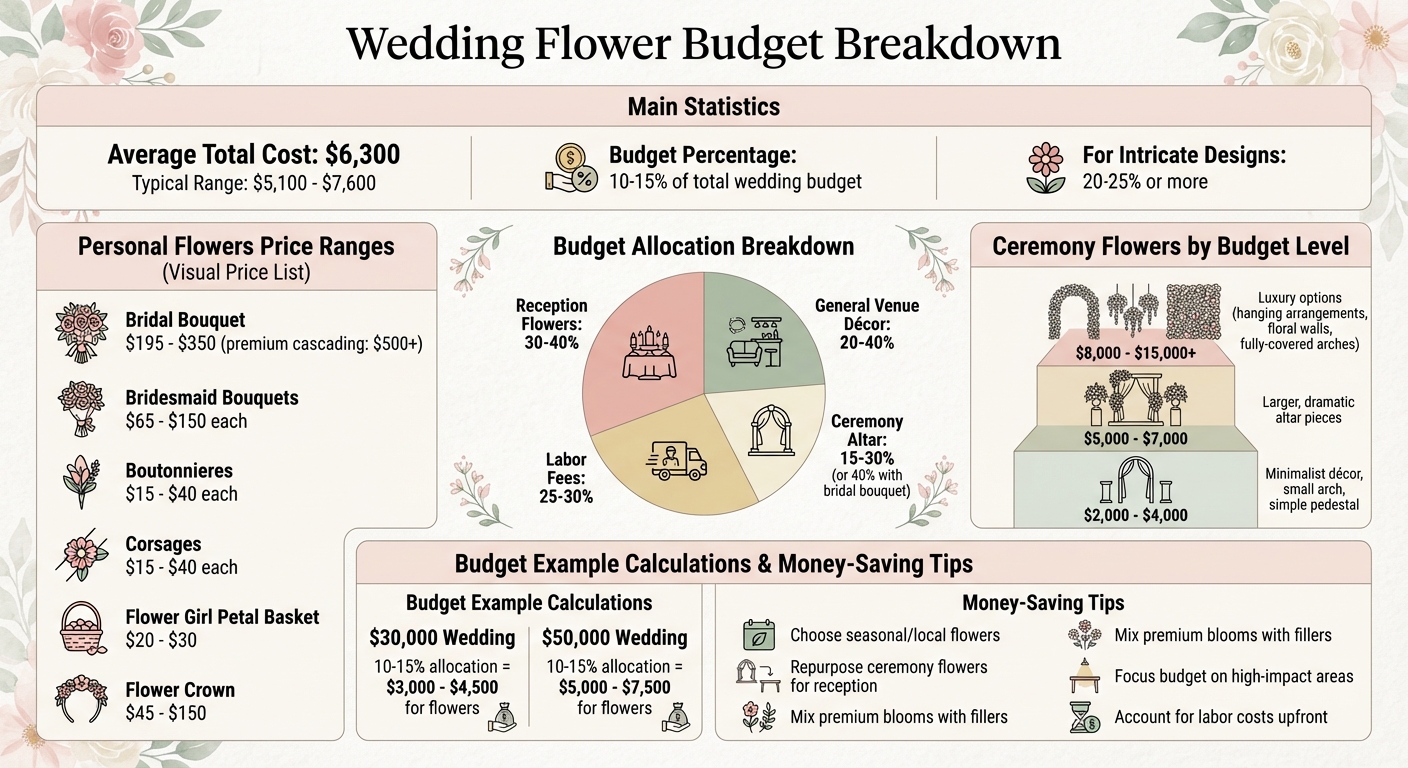
Wedding Flower Budget Breakdown: Cost Allocation and Price Ranges
💐 How Much Do Wedding Flowers Cost? | Wedding Budget Breakdown
Budget Planning Steps Before Ordering Flowers
Before placing any flower orders, it’s essential to align your floral vision with your budget. Taking time to plan can help you set realistic expectations and communicate your needs effectively with florists.
Determine Your Total Budget and Flower Allocation
Start by calculating your overall wedding budget and decide how much to dedicate to flowers. Typically, 10–15% of your total budget goes to florals, but if flowers are a top priority, consider allocating 20–25%. For example, a $30,000 wedding might reserve $3,000–$4,500 for flowers, while a $50,000 wedding could set aside $5,000–$7,500. Being upfront about your budget when meeting with florists allows them to suggest options that fit your financial plan while still meeting your vision.
Count Your Guests and Review Venue Layout
Your guest count directly impacts the number of centerpieces you'll need. For instance, if you're hosting 120 guests and seating 10 per table, you’ll need 12 centerpieces. Don’t forget additional arrangements for spots like the head table, cake table, bar, or escort card display. Also, take a close look at your venue’s layout and existing features. A space with natural beauty or striking architectural details may require fewer floral accents, enabling you to allocate more of your budget to standout pieces. Once you understand your venue’s needs, focus on the areas where flowers will have the most visual impact.
Identify Your Must-Have Flowers and Style
Decide on the floral elements that matter most, such as the bridal bouquet, ceremony backdrop, or reception centerpieces. These are often the most photographed and memorable details. Narrow down your design preferences and color palette to align with your wedding theme. Having a clear idea of your must-haves will make it easier to get accurate quotes from florists.
With your budget, guest count, and floral priorities in place, you’ll be well-prepared to explore specific floral options.
Personal Flowers: Items and Price Ranges
Personal flowers play a central role in your wedding, appearing in portraits, ceremony shots, and detail photos. Understanding typical costs can help you plan your budget effectively while ensuring every member of your wedding party is adorned with beautiful blooms.
Bridal and Bridesmaid Bouquets
The bridal bouquet is often the centerpiece of your personal flowers, with prices typically ranging from $195 to $350 for a standard arrangement. If you’re envisioning a larger cascading design with premium flowers, costs can climb beyond $500. Since this bouquet features prominently in nearly every wedding photo, it’s usually the most significant floral investment.
Bridesmaid bouquets, on the other hand, are smaller and simpler, with costs ranging from $65 to $150 each. For a bridal party of five bridesmaids, you’re looking at a total of $325–$750. To stretch your budget, consider mixing premium flowers with greenery or fillers. You can also repurpose bridesmaid bouquets as reception décor, adding charm to your tables without additional expense.
Boutonnieres, Corsages, and Flower Girl Accessories
Boutonnieres are small floral arrangements worn on the lapel, typically for the groom, groomsmen, fathers, and grandfathers. These usually cost $15 to $40 each. If you’re planning for six to eight boutonnieres, this part of your floral budget will range from $90 to $320.
Corsages for mothers and grandmothers generally fall into a similar price range. For flower girls, you have two main options: a petal basket, which costs around $20 to $30, or a flower crown, which is more elaborate and ranges from $45 to $150. When deciding between these, consider your overall floral budget and the look you’re aiming for. For a finishing touch, subtle hair accessories can tie all the floral details together beautifully.
Hair Flowers and Floral Accessories
Floral hair accessories, such as combs, individual blooms, or small clusters, add elegance to bridal and bridesmaid hairstyles. For a simpler and more budget-friendly option, single-stem flowers make a lovely statement without the cost of more intricate designs.
Opting for seasonal, locally sourced flowers can help keep costs down while ensuring freshness. These choices not only support your budget but also add a natural, vibrant touch to your look. Share your budget and style preferences with your florist - they can suggest creative alternatives that align with your vision while staying within your price range.
Ceremony Flowers: Items and Planning Tips
Ceremony flowers play a key role in setting the mood for your vows and are often a major feature in wedding photos. Typically, altar décor makes up 15–30% of your total floral budget, and some experts recommend combining the altar and bridal bouquet to account for about 40% of your overall floral spend.
Altar Backdrop and Ceremony Arch
The altar is the centerpiece of the ceremony, whether it’s a floral arch, chuppah, grounded arrangement, or pedestal display. This is the spot where vows are exchanged and your first kiss as newlyweds happens. Décor options range from simple accents to elaborate floral installations, with costs depending on the size and complexity of the design.
- A $2,000–$4,000 budget typically covers minimalist décor, such as a small arch or simple pedestal.
- With a $5,000–$7,000 budget, you can opt for larger, more dramatic altar pieces.
- For $8,000–$15,000 or more, luxury options like hanging arrangements, floral walls, or fully-covered arches become available.
"Partial coverage on an arch can go a long way. A cluster of florals with trailing greenery is a classic look that couples are more than happy to have."
– Erice McNeff, Floral Designer and Founder of Everbloom Floral Design
If you’re looking to balance beauty and budget, incorporating greenery alongside premium blooms can create texture without driving up costs. For ceremonies with specific traditions - like chuppahs in Jewish weddings or floral garlands in Hindu celebrations - be sure to include these meaningful elements. For unity candle ceremonies, consider a low centerpiece at the altar instead of tall arrangements.
Aisle and Entrance Flowers
Once the altar is set, extend the floral theme to the aisle and entrance. These elements not only guide guests to their seats but also add to the overall ambiance. Popular options include aisle markers, floral runners, and statement pieces at the entrance. While tall arrangements can look stunning in photos, they might block guests’ views during the ceremony, so choose placements carefully.
For practical and cost-effective aisle décor, floor-based arrangements are easier to move and reuse than traditional pew markers. Combine premium blooms with fillers like baby’s breath, waxflower, or carnations to create fuller displays without overspending. You can even use dried baby’s breath, spray-painted to match your color scheme. To elevate the look, consider adding non-floral elements like candles, lanterns, or personal keepsakes. Focus your investment on areas that will be most visible in photos and can transition seamlessly from ceremony to reception.
Moving Ceremony Flowers to the Reception
Reusing ceremony flowers for the reception is a smart way to cut costs and minimize waste. For example, altar arrangements can be moved to the escort card table, bar, or cake table. Aisle arrangements can highlight the newlyweds’ chairs, and welcome pieces can enhance lounge areas.
"We try and re-use florals from the ceremony for the reception. There's no reason a welcome arrangement from the ceremony can't be repurposed on the bar, or pieces from the ceremony altar can't be repurposed in a lounge or on the head table. This will ultimately cut down on overarching costs and waste."
– Michelle Hodgson, Floral Designer and Owner of Blossom & Vine Floral Co.
Talk to your florist about repurposing arrangements to understand any additional labor costs. While moving flowers can save money overall, transportation and setup may increase certain expenses, so weigh both options carefully. Opt for designs that are easy to transport and can stay fresh throughout the day.
"When I am meeting with a couple and budget is a factor, I will suggest fewer, but larger elements. You have your tables and the personal flowers and then from there...what will make the most impact for what you would like to spend. We want our clients and their guests to be truly wowed."
– Allison Futeral, Owner of Crimson Horticultural Rarities
sbb-itb-2be19a4
Reception Flowers: Items and Décor Checklist
Reception flowers often account for the largest share of your wedding flower budget. Around 30–40% typically goes toward table centerpieces, while 20–40% is reserved for general venue décor, such as entrances, lounge areas, and bar arrangements. Since the reception is where guests spend the majority of their time, it’s worth putting extra thought into these floral details. Here’s a closer look at the key areas to consider for your reception décor.
Guest Table Centerpieces
Table centerpieces are a major highlight of any reception. These arrangements are not only highly visible but also among the most photographed elements of the evening. Choosing between low and tall centerpieces can significantly impact the overall look and budget. Low centerpieces are often more economical, while tall arrangements create a dramatic effect that draws the eye. Mixing both heights across tables is a smart way to add depth and variety without overspending on every table.
Head Table and Cake Flowers
The head table is a central feature of the reception, serving as the backdrop for toasts and dinner. It’s a great opportunity to make a statement. Consider options like lush garlands running the length of the table or bold floral arrangements placed strategically. When it comes to the cake, flowers can tie the design into your overall theme. Whether you prefer a subtle accent or a striking floral display, cake flowers can elevate this sweet centerpiece. As mentioned in the ceremony section, arrangements used earlier in the day can often transition seamlessly to these areas.
Bar, Escort Table, and Photo Area Flowers
Smaller reception spaces can also shine with the right floral touches. The bar, escort card table, and photo areas are all high-traffic or focal points that benefit from thoughtful décor. A standout arrangement at the bar adds sophistication, while the escort card table needs just enough flowers to frame the display neatly. For photo areas or lounge spaces, versatile floral designs can enhance the ambiance and even be repurposed throughout the event.
Managing Costs: Factors and Budget Tips
Planning carefully can help you get the most out of your floral budget. By understanding what drives costs, you can make smarter decisions. Keep in mind that flower prices typically don’t include labor, design, or logistics.
Select Seasonal and Local Flowers
Opting for flowers that are in season during your wedding is a smart way to save money. Seasonal blooms are easier to source locally, cutting down on transportation and handling expenses. As The 228 In Sterling explains, "Out-of-season produce and plants require transporting from long distances. This makes them a lot more expensive, especially if they're short-lived and vendors need to fly them in from their source rather than using trucks or boats to limit the cost involved." They further emphasize, "Because growers can pick in-season locally grown flowers closer to the event, they provide optimal freshness and longevity." However, even local flowers can get pricey if they need greenhouse conditions in the off-season. Choosing seasonal flowers not only saves money but also ensures vibrant, fresh arrangements for your wedding.
Mix Premium and Affordable Flowers
You don’t have to splurge on high-end blooms for every single arrangement. Instead, focus your budget on areas that will draw the most attention, like your bridal bouquet, ceremony arch, or centerpiece displays. Use premium flowers - such as peonies, garden roses, or orchids - in these key spots to make a statement. For less prominent areas, like cocktail tables, consider using more affordable greenery or filler flowers, or go with simple bud vases. This mix of standout blooms and budget-friendly elements allows you to create a visually stunning setup without overspending.
Include Labor and Rental Costs
Labor is a major but often overlooked part of your floral budget. Wedding florist Marta Sandri explains, "The cost of floral arrangements goes beyond just the flowers - it includes design planning, sourcing, logistics, labor, and installation. Every step - from selection to setup - requires expertise". Be prepared for delivery, setup, and breakdown fees, especially for intricate designs like hanging centerpieces, which require additional labor. Even repurposing ceremony flowers can lead to higher costs because of the extra work involved. Nicole Day of Ember & Stone Events advises, "This can be a cost saver, but it can also increase the cost of items because of the additional labor required. So really looking at both prices is super important". Factoring in these details will help you avoid surprises and stay within budget.
Conclusion
This checklist covers the key steps to align your floral dreams with your budget. Start planning your wedding flower budget at least six months to a year before your big day to secure your florist and explore seasonal flower options.
Focus on the most important floral elements - like your ceremony centerpiece, bouquets, or tablescapes - to create striking focal points that leave a lasting impression. By honing in on these must-have pieces, you can achieve a cohesive design while staying within your budget.
Be upfront with your florist about your budget and vision from the beginning. This helps them provide personalized suggestions that align with your style and financial plans. Kristine Cholakian Cooke, owner of Simply Charming Socials, shares:
"We always find that brides who are more open-minded going into initial floral meetings can truly learn about flowers and options they didn't know existed. In the end, the results can be beautiful and unexpected."
Consider partnering with Marietta Floral Design for expert advice, creative designs, and full event support - from sourcing to setup - so you can achieve breathtaking wedding flowers without breaking the bank.
FAQs
How can I save on labor costs for my wedding flowers?
To cut down on labor costs, prioritize key focal points such as the altar or the sweetheart table - these spots will shine in photos and draw the most attention during the ceremony. Make the most of your floral budget by reusing arrangements from the ceremony at the reception. Choose timeless, understated designs that are quicker to assemble and set up. Work closely with your florist to design arrangements that are both efficient to create and visually stunning, ensuring a memorable setting without unnecessary labor.
Why should I choose seasonal and locally grown flowers for my wedding?
Choosing flowers that are in season and locally grown can make a big difference for your wedding. For starters, seasonal flowers are often more budget-friendly and easier to find, which can help you manage costs without sacrificing beauty. Plus, flowers sourced locally tend to be fresher, last longer, and look more vibrant since they skip the long journey of being shipped from far away.
On top of that, opting for local blooms is a great way to support nearby farmers and small businesses, giving back to your community. It’s also a thoughtful choice for the planet - local and seasonal flowers cut down on transportation and energy use, making them a more eco-conscious option for your big day.
How can I reuse my ceremony flowers at the reception to save money?
To stretch your floral budget further, think about reusing your ceremony flowers for the reception. For instance, aisle arrangements can double as centerpieces for guest tables, and altar arrangements or arch flowers can be relocated to the sweetheart table, buffet stations, or even near the dance floor. Work closely with your florist or wedding planner to make sure everything transitions smoothly between the ceremony and reception. This approach not only helps you cut costs but also ensures a consistent floral theme throughout your big day.